
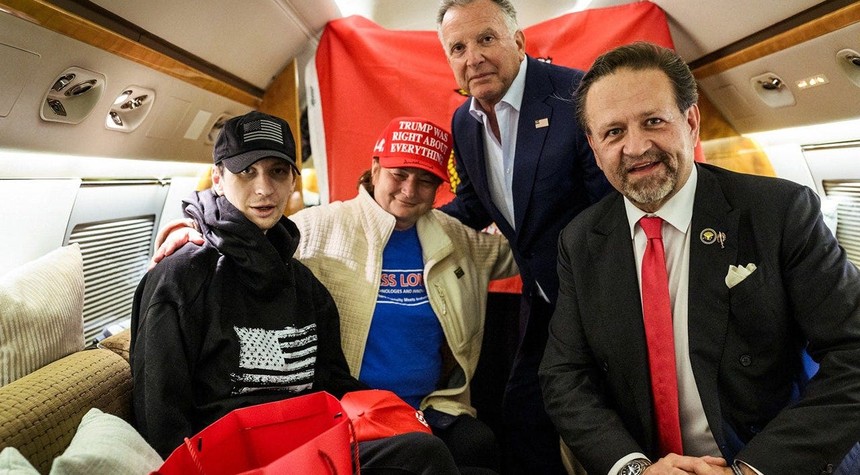
The chief investigative officer who helped secure the release of former U.S. Marine Robert Gilman from Russian detention has provided a sobering account of the conditions the veteran endured during his 1,666 days of wrongful imprisonment.
Kieran Ramsey, who serves as chief investigative officer for Global Reach and acted as the family representative throughout Gilman’s ordeal, described what he characterized as systematic psychological warfare inflicted upon the American veteran while detained in Russia. His account underscores the harsh realities faced by Americans wrongfully held abroad and raises urgent questions about five other U.S. citizens who remain in Russian custody.
Ramsey credited the Trump administration with employing decisive diplomatic pressure to secure Gilman’s release on humanitarian grounds. The veteran was returned to U.S. authorities this week after Russian police had arrested him in the city of Voronezh.
“Mr. Gilman is home, without doubt, because of the leadership from President Trump,” Ramsey stated. “He made a full court press with his senior most team requesting that the Russians release him on a humanitarian basis, which is exactly what happened.”
The successful negotiation involved coordinated efforts from several high-ranking administration officials. Ramsey specifically noted the contributions of Steve Witkoff, serving as special envoy, Secretary of State Marco Rubio, and even the director of the Central Intelligence Agency. The involvement of such senior officials demonstrates the priority the administration placed on securing Gilman’s freedom.
The case represents a significant diplomatic achievement for the Trump administration, which has made the return of Americans detained abroad a cornerstone of its foreign policy objectives. The administration’s approach emphasized quiet diplomacy combined with firm pressure at the highest levels of government.
While Gilman’s return marks a victory for American diplomatic efforts, Ramsey emphasized that the work remains incomplete. Five other American citizens continue to be held in Russia under circumstances that their families and advocates describe as wrongful detention.
The conditions Gilman experienced during his nearly four and a half years in Russian custody paint a disturbing picture of the treatment Americans can face when detained by adversarial nations. Ramsey’s description of psychological warfare suggests a deliberate campaign designed to break the spirit of detainees, raising serious humanitarian concerns.
The successful resolution of Gilman’s case may provide a template for future negotiations regarding other detained Americans. The humanitarian approach, backed by high-level diplomatic engagement, proved effective in this instance and could inform strategies for securing the release of the remaining five Americans held in Russia.
As Gilman begins the process of reintegrating into American life after his prolonged ordeal, his case serves as a reminder of both the risks Americans face abroad and the importance of sustained diplomatic efforts to bring them home. The administration’s commitment to leaving no American behind has been demonstrated through action, though the mission will not be complete until all wrongfully detained citizens are returned to U.S. soil.
Related: Elite Athletes Serve Dual Mission as Air Force Maintains Operations Against Iran
