
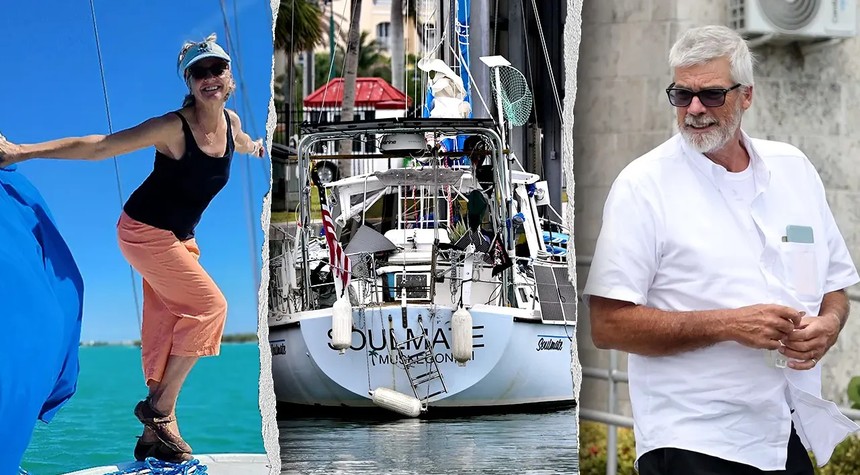
Federal investigators have identified a new search area in Bahamian waters following analysis of GPS data from the phone of Brian Hooker, whose wife Lynette Hooker disappeared from their dinghy in early April. Sources familiar with the investigation report that the data reveals inconsistencies with the husband’s initial account to authorities.
The couple departed from Hope Town in the Bahamas at approximately 7:30 p.m. on April 4. Brian Hooker told local authorities that rough waters caused his wife to fall from their small boat as they returned to their sailboat, the Soulmate, which served as their full-time residence in retirement.
However, GPS data obtained from a marine navigation application on Brian Hooker’s phone has led United States authorities to request permission from Bahamian officials to conduct searches in a different location. The new area of interest features waters approximately 25 feet deep in the Sea of Abaco.
The discrepancy between the phone data and Brian Hooker’s statement to law enforcement represents a significant development in the case. Investigators have focused their attention on the digital evidence, which provides an objective record of the couple’s movements that evening.
The Hookers were known to sail regularly throughout United States waters and the Caribbean. Their social media accounts documented their maritime lifestyle, showing extensive travel aboard the Soulmate.
The vessel itself has been transported to Fort Pierce, Florida, where it remains secured at a United States Coast Guard station. Coast Guard investigators conducted a thorough examination of the sailboat on May 13 as part of their ongoing investigation.
Karli Aylesworth, Lynette Hooker’s daughter, confirmed that the Coast Guard has requested DNA samples from family members to assist with the investigation. This standard procedure in missing persons cases allows authorities to identify any recovered remains through scientific comparison.
The case has drawn federal attention due to its maritime nature and the jurisdictional complexities involved in incidents occurring in international waters. United States authorities are coordinating with their Bahamian counterparts as the investigation proceeds.
The depth of the proposed search area presents both challenges and opportunities for investigators. At 25 feet, the waters are accessible to divers and underwater search equipment, though visibility and currents in the Sea of Abaco can complicate recovery efforts.
As the investigation continues, authorities have not publicly disclosed the specific nature of the GPS data discrepancies or what they might indicate about the events of April 4. The focus remains on locating Lynette Hooker and determining the circumstances of her disappearance.
The case underscores the critical role that modern technology plays in maritime investigations. GPS data, cellular phone records, and marine navigation applications provide investigators with detailed information that can corroborate or contradict witness statements, even in remote ocean locations.
Related: Federal Judge Found to Have Conducted Affair Inside Courthouse Chambers
