
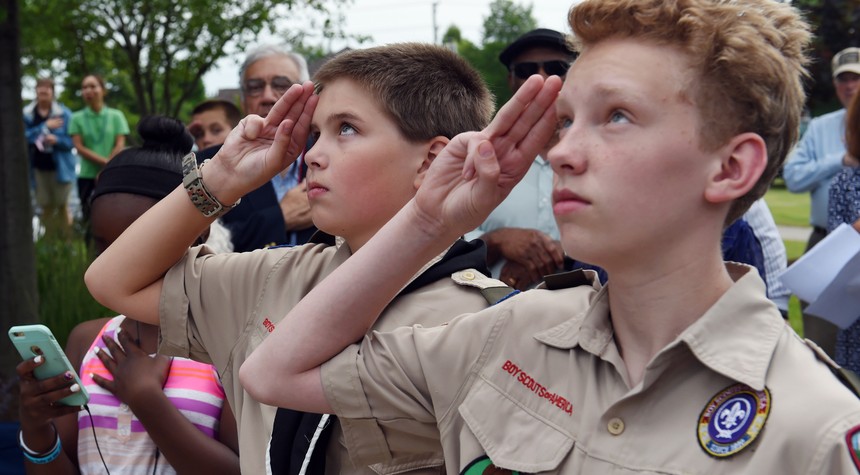
The American military’s longstanding relationship with the Scouting movement faces scrutiny as leaked draft memoranda suggest the Defense Department may end preferential treatment for an organization that has undergone significant transformation in recent years.
The documents, obtained through unofficial channels and attributed to Defense Secretary Pete Hegseth, recommend eliminating special benefits that Eagle Scouts have received upon military enlistment since the New Deal era. These benefits include advanced rank, higher initial pay, and access to military equipment and support for Scouting events unavailable to other youth organizations.
The recommendation comes as the organization formerly known as the Boy Scouts of America, now called Scouting America, continues to navigate profound changes to its membership policies and organizational identity. The movement’s trajectory over the past two decades has been marked by declining enrollment, bankruptcy proceedings stemming from sexual abuse litigation, and fundamental shifts in its approach to membership eligibility.
The numbers tell a sobering story. At its peak in 1969, the Boy Scouts of America counted six million members. Today, despite the nation’s population growing by more than one-third since then, Scouting America reports approximately one million members.
The organization’s evolution accelerated over the past decade with decisions to admit openly LGBTQ youth and adults into membership and leadership positions. These policy changes prompted some families and religious organizations to seek alternatives, including programs developed by the Latter Day Saints Church and Trail Life USA, which maintain more traditional approaches to youth development.
The leaked memoranda characterize the current Scouting organization as reflective of diversity, equity, and inclusion ideology that the current administration seeks to eliminate from military operations, government agencies, and educational institutions. The documents argue that such policies have contributed to diminished standards within Scouting, undermining both meritocracy and the movement’s historical mission to cultivate what they term “masculine values.”
This critique raises substantive questions about whether federal endorsement remains appropriate for an organization whose direction has become a point of cultural division, despite its century-long legacy of government support.
The organization’s founding principles in 1910 included pledges to be “morally straight,” “clean,” and “reverent,” with emphasis on “duty to God.” These commitments were historically understood within a framework of traditional moral teaching, including guidance on sexual behavior consistent with conventional marriage.
As recently as 2000, the Boy Scouts successfully argued before the United States Supreme Court for its right as a private organization to set membership standards, including restrictions on openly expressed gender identity within its units and camps.
The current situation presents a test case for how government institutions should respond when established civic organizations undergo fundamental transformations that divide their traditional constituencies. The question is not merely administrative but touches on broader debates about institutional evolution, cultural values, and the appropriate relationship between government and civil society.
Whether the Defense Department proceeds with ending these long-established benefits will signal how the administration balances respect for historical partnerships against concerns about contemporary organizational direction. The decision will undoubtedly be watched closely by those on all sides of America’s ongoing cultural debates.
Related: Oklahoma University Investigates Viewpoint Discrimination Claims Against Two Faculty Members
