The expanding artificial intelligence industry faces a critical challenge that could see data centers consuming as much water as the entire American population drinks annually by the end of this decade, according to a leading environmental technology executive.
Christophe Beck, chief executive of Ecolab, a company specializing in sustainable solutions for industrial water use, issued a stark warning about the trajectory of current practices. By his company’s estimates, data centers using existing cooling technologies will require water equivalent to the nation’s total drinking water consumption by 2030. This phenomenon, Beck stated plainly, is not sustainable.
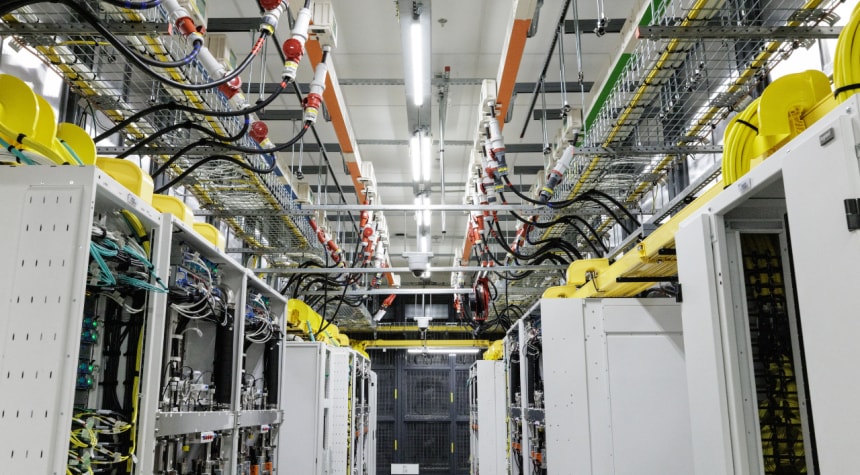
The water consumption occurs at every stage of the artificial intelligence process. Chip production, operation, and cooling all require substantial water resources. For years, air cooling proved sufficient for data center operations. The chips in use four or five years ago generated manageable amounts of heat that could be dissipated through conventional air conditioning systems.
However, the rapid advancement of computing power and the complexity of modern processors have changed that equation fundamentally. Today’s chips generate heat that air cooling simply cannot manage effectively. Water, Beck explained, extracts heat thirty times more efficiently than air, making it the logical solution for the new generation of high-performance data centers.
This shift toward water cooling has prompted innovation in the industry. The newest approach, direct chip water cooling, brings cold water into contact with the processors themselves. This method offers dual advantages. It increases operational efficiency while simultaneously improving sustainability through water recycling. A single supply of water can cool every chip in a data center through a closed-loop system, drastically reducing total consumption and eliminating the impact on surrounding communities and natural resources.
The backlash against data center development has already manifested in the political arena. On November 4, voters across the nation elected officials who campaigned on limiting data center expansion. In Texas, Democratic challenger Gina Hinojosa defeated Republican Governor Greg Abbott after running heavily on a platform calling for a data center moratorium.
Beck acknowledged the legitimacy of community concerns. Data centers installed in recent years have placed enormous demands on local power grids and water supplies. Texas presents a particularly acute case study. While the state maintains one of the nation’s strongest economies, it simultaneously faces significant water stress. The combination of rapid growth and limited water resources creates an untenable situation without technological intervention.
The solutions Ecolab has developed will apply exclusively to new construction projects. Existing facilities, which continue to generate community opposition, rely on older, more resource-intensive technologies. The closed-loop systems now being implemented represent a fundamental departure from previous water-cooling methods.
The water purification requirements for chip fabrication present even greater challenges than data center cooling. These fabrication facilities require water of extraordinary purity, a million times purer than pharmaceutical-grade water suitable for injection into the bloodstream. Recycling water to maintain such exacting standards demands sophisticated treatment processes.
Ecolab’s approach incorporates what Beck described as connected water, which contains trace materials that allow continuous monitoring of water quality throughout the manufacturing process. This monitoring ensures optimal chip production while enabling water reuse through precise re-treatment protocols.
The economic and environmental benefits of these advances are substantial. The technologies promise superior chip quality, reduced operational costs, and water-neutral operations. As artificial intelligence continues its rapid expansion, these innovations may determine whether the industry can grow without exhausting critical natural resources or facing mounting political opposition from water-stressed communities across America.
Related: White House Withdraws FDA Commissioner Nomination Before Senate Vote