
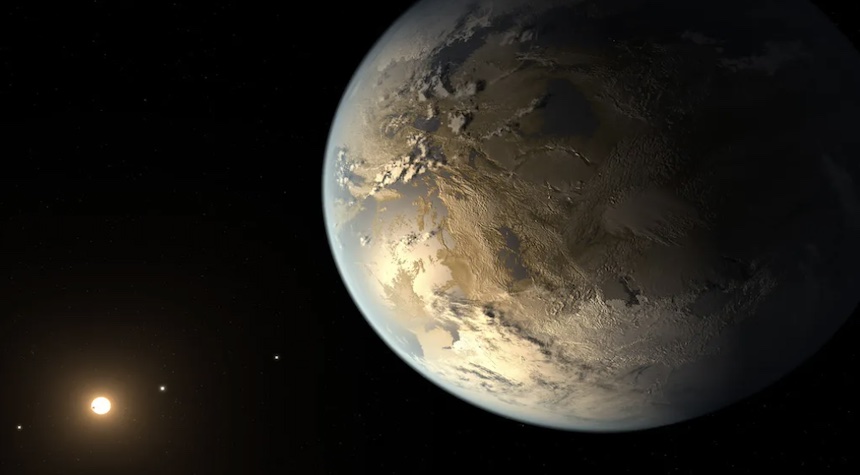
NASA’s James Webb Space Telescope has detected what appears to be a massive planet orbiting a young star some 34 light-years from Earth. This discovery, if confirmed, could have significant implications for our understanding of potentially habitable worlds beyond our solar system.
According to reliable sources at NASA and other space agencies, astronomers have found compelling evidence of a planet approximately 100 times the mass of Earth. This celestial body, provisionally named TWA 7b, orbits a red dwarf star known as TWA 7 or CE Antilae.
The James Webb telescope, the most advanced space observatory ever deployed, captured an infrared signature within the star’s debris disk. Initial analysis suggests the object could be a young, cold planet with a surface temperature of about 120 degrees Fahrenheit. It’s worth noting that scientists generally consider temperatures between 5 and 251 degrees Fahrenheit to be compatible with life as we know it.
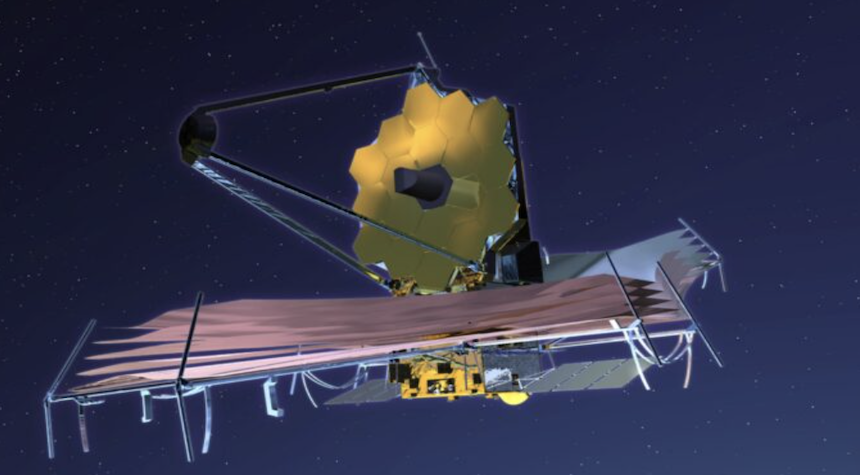
Astronomers employed a technique called high-contrast imaging, which allows them to suppress the bright glare of the host star and reveal faint nearby objects. If confirmed, this would mark the first time the Webb telescope has directly imaged a newly discovered planet.
This finding demonstrates the Webb telescope’s capacity to explore previously undetectable low-mass planets around nearby stars. Anne-Marie Lagrange, a researcher from the Observatoire de Paris-PSL and lead author of the study, states that the planet’s position aligns precisely with predictions based on the structure of the surrounding debris disk.
The evidence suggests that this discovery could be an important step forward in our understanding of planetary systems. However, it’s crucial to note that further observations and analysis will be necessary to confirm the nature of this object and its potential for supporting life.
