
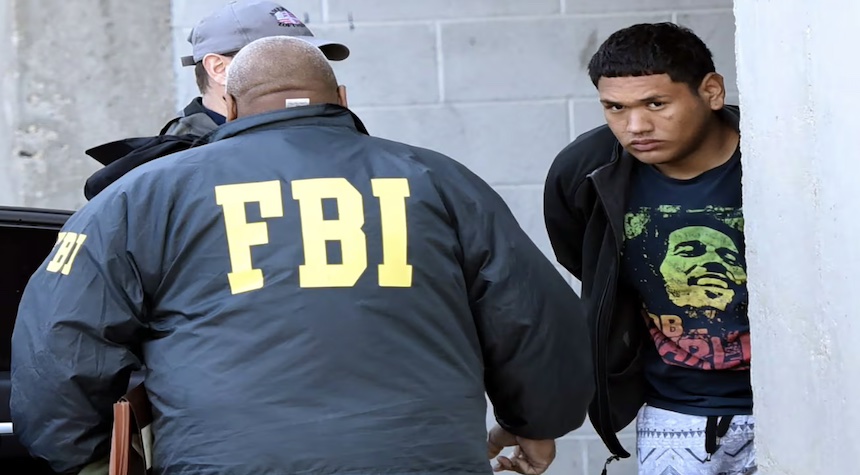
Alexi Saenz, the leader of an MS-13 clique operating in the suburbs of New York City, faces sentencing today in a federal racketeering case. The charges against Saenz involve eight murders, including the 2016 killings of two high school girls that brought national attention to the violent Central American street gang.
Saenz, known by the aliases “Blasty” and “Big Homie,” pleaded guilty last year to authorizing these murders and other crimes during a period of intense gang violence. This wave of brutality prompted then-President Donald Trump to make several visits to Long Island and call for the death penalty for Saenz and other gang members.
The prosecution is seeking a maximum sentence of 70 years, arguing that Saenz’s “senseless” and “sadistic” crimes warrant him spending the rest of his life in prison. The defense, however, is requesting a 45-year sentence, claiming that Saenz is remorseful and “on a journey of redemption.”

Among the victims were Kayla Cuevas, 16, and Nisa Mickens, 15, lifelong friends killed with a machete and baseball bat. Other victims included Javier Castillo, 15, and Oscar Acosta, 19, both brutally murdered in isolated areas.
MS-13, or Mara Salvatrucha, is believed to have originated as a neighborhood street gang in Los Angeles in the mid-1980s, formed by immigrants fleeing civil war in El Salvador. It has since grown into a transnational criminal organization.
This raises important questions about the effectiveness of law enforcement strategies against organized crime and the societal factors that contribute to gang recruitment. The evidence suggests that despite incarceration, Saenz has remained “firmly entrenched” in MS-13 culture, according to prosecutors.
As the sentencing unfolds, the nation watches to see how the justice system will respond to these heinous crimes.
