
Mexican military forces killed Nemesio Oseguera Cervantes, one of the world’s most wanted drug traffickers, during an operation Sunday morning in Jalisco state. The death of the man known as “El Mencho” represents perhaps the most significant blow to organized crime in Mexico in recent years.
Mexico’s Defense Department confirmed the operation’s success as the nation faces mounting pressure from the Trump administration to intensify efforts against the powerful cartels flooding American communities with fentanyl and other deadly narcotics.
The military operation unfolded in Tapalpa, Jalisco, targeting the elusive leader of the Cartel de Jalisco Nueva Generación. Oseguera Cervantes, a former police officer who built one of Mexico’s most feared criminal organizations, had eluded capture for years despite carrying a $15 million bounty offered by the United States government.
The CJNG, under Oseguera’s leadership, emerged as a principal supplier of fentanyl to the United States, contributing to an overdose crisis that has claimed hundreds of thousands of American lives. The cartel’s reach extended across Mexico and into numerous American cities, making its leader a primary target for both Mexican and American law enforcement agencies.
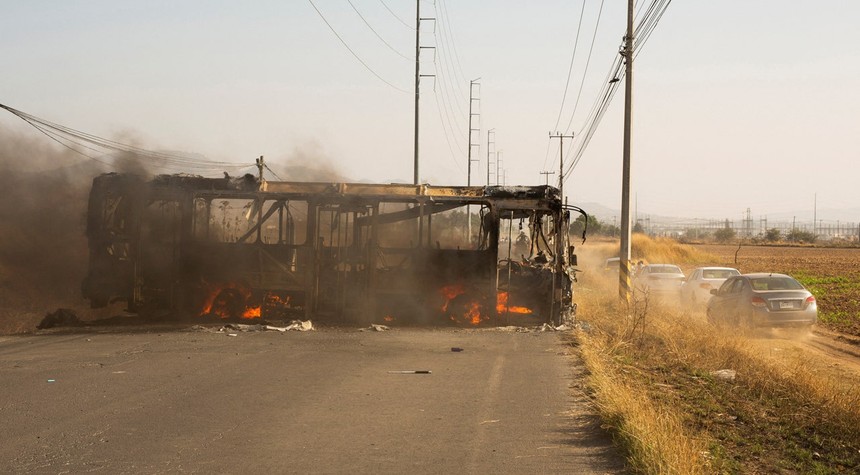
Following the announcement, Mexican government officials issued warnings about potential violent responses from cartel members. Reports of clashes in Jalisco state and widespread criminal activity across multiple regions prompted immediate concern for public safety. The situation grew serious enough that the United States Embassy in Mexico issued shelter-in-place advisories for several Mexican states, urging American citizens to remain indoors and avoid unnecessary travel.
The timing of this operation coincides with President Trump’s repeated calls for Mexico to take stronger action against the cartels responsible for trafficking fentanyl and other dangerous substances across the southern border. The President has made the fentanyl crisis a central focus of his administration’s domestic and foreign policy agenda, pressing Mexican authorities to treat the cartels as the terrorist organizations he believes them to be.
Oseguera’s criminal empire represented a significant evolution in Mexican organized crime. Unlike earlier cartel leaders who maintained lower profiles, the CJNG operated with brazen violence and territorial ambition, challenging both rival cartels and government forces with sophisticated weaponry and military-style tactics.
The question now becomes whether this significant victory will meaningfully disrupt the flow of fentanyl into American communities or whether the cartel’s infrastructure will simply elevate new leadership to continue operations. History suggests that eliminating cartel leaders, while symbolically important, does not always translate into lasting reductions in drug trafficking.
For now, however, both Mexican and American officials can point to a concrete achievement in the ongoing struggle against organizations that have devastated communities on both sides of the border. The operation demonstrates Mexico’s capability to strike at the highest levels of cartel leadership when sufficient resources and political will align.
The coming days will reveal whether this success marks a turning point in the fight against the cartels or merely another chapter in a conflict that has claimed countless lives across two nations.
Related: Attorney Threatens Billionaire Les Wexner During Congressional Deposition on Epstein Ties
