
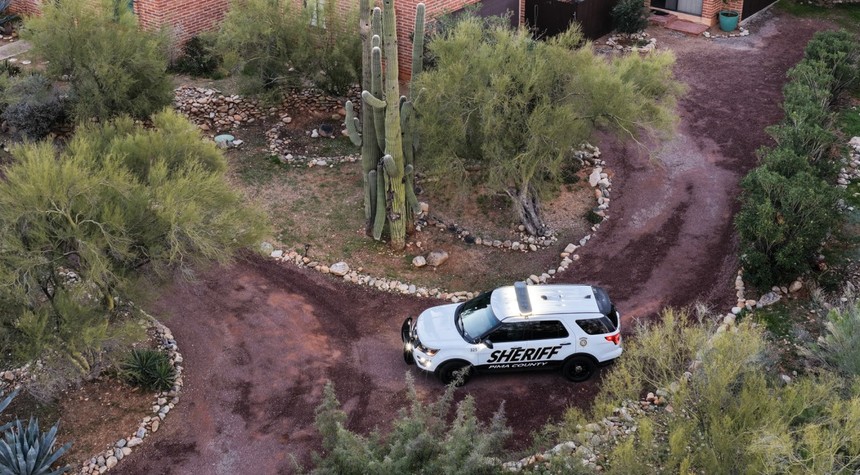
TUCSON, Arizona — In the search for Nancy Guthrie, the 84-year-old mother of a prominent television journalist who disappeared three weeks ago, investigators face a familiar challenge in modern forensic science: the painstaking work of separating mixed DNA samples that could identify a suspect.
Pima County Sheriff Chris Nanos reported last week that mixed and partial DNA was discovered at Guthrie’s residence. Critically, some of that genetic material does not belong to Guthrie, her family members, or anyone known to have worked at the home. This has raised the possibility that investigators may have obtained DNA from whoever is responsible for her disappearance.
The promise of such evidence is considerable. Investigative genetic genealogy has proven instrumental in solving some of the nation’s most notorious criminal cases. DNA recovered from items as ordinary as a discarded tissue, a pizza crust, or a cotton swab has led to breakthroughs in cases that had confounded investigators for years or even decades.
However, the laboratory analyzing the evidence has reported challenges with the samples. Sheriff Nanos declined to specify the nature of these obstacles, though he expressed confidence that advancing technology may resolve them in the coming weeks or months.
“We listen to our lab, and our lab tells us that there are challenges with it,” Nanos stated. “But our lab also knows that the technology is moving so fast that they think some of this will resolve itself to allow them to do better with a mixture of that kind of thing.”
The sheriff remains hopeful that the samples will eventually reach a point where they can be submitted for investigative genetic genealogy analysis or entered into the Combined DNA Index System, the FBI’s database of DNA profiles from convicted criminals. At present, however, the evidence has not reached that threshold.
Mixed DNA presents a particular challenge in forensic analysis. When a sample contains genetic material from multiple individuals, laboratory technicians must separate and identify each person’s contribution to the sample. This process requires both sophisticated technology and considerable expertise.
Investigative genetic genealogy has revolutionized cold case investigations in recent years. The process involves converting unidentified DNA evidence into a digitized profile, which is then compared against ancestry databases to identify relatives. From there, investigators can construct family trees and systematically narrow down potential suspects.
The technique has been employed successfully in cases that captured national attention, providing answers that traditional investigative methods could not deliver. Yet its effectiveness depends entirely on the quality and clarity of the DNA sample being analyzed.
Nancy Guthrie was reported missing on February 1st. In the three weeks since her disappearance, authorities have not publicly identified any suspect or person of interest in the case. Sheriff Nanos has stated that the Guthrie family has been cleared as potential suspects.
The investigation continues under the leadership of the Pima County Sheriff’s Department, working in coordination with federal and state partners. While the DNA evidence offers a potential path forward, investigators must wait for laboratory science to catch up with their needs.
For now, the case serves as a reminder of both the remarkable capabilities of modern forensic science and its limitations. The same tools that have brought closure to families decades after crimes were committed require patience and precision. In the search for Nancy Guthrie, that patience is being tested as technology races to provide answers.
Related: Attorney Threatens Billionaire Les Wexner During Congressional Deposition on Epstein Ties
