
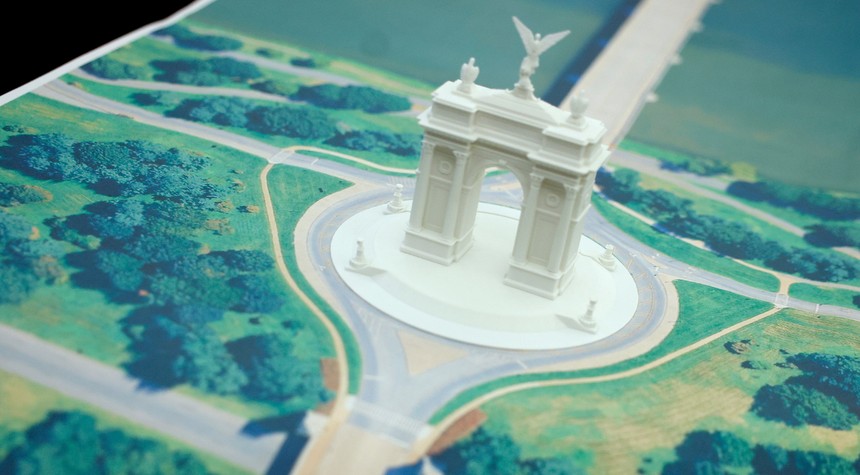
Three Vietnam veterans have initiated legal proceedings against the Trump administration concerning a proposed 250-foot commemorative arch that would stand near Arlington National Cemetery, raising questions about the preservation of historic sightlines in the nation’s capital.
Michael Lemmon, Shaun Byrnes, and Jon Gundersen, joined by architectural historian Calder Loth, contend that President Donald Trump’s “Great Triumphal Arch” would obstruct the carefully designed views between the Lincoln Memorial, Arlington National Cemetery, and Arlington House. The veterans, represented by the Public Citizen Litigation Group, have maintained their legal challenge for several months.
The proposed structure, which the President has described as the largest arch in the world, would commemorate the nation’s 250th anniversary. According to Nicolas Sansone, attorney for the plaintiffs, two of the veteran plaintiffs intend to be interred at Arlington National Cemetery, underscoring their personal connection to the site.
The legal challenge centers on fundamental principles that have guided the capital’s development since its inception. Washington was deliberately planned to maintain unobstructed views between significant historical landmarks, particularly the visual corridor connecting the Lincoln Memorial on the eastern bank of the Potomac River with Arlington House and Arlington National Cemetery on the western side.
The National Park Service has acknowledged in planning documents that the project would produce “adverse effects on historic properties.” The agency further stated that such effects “cannot be fully avoided while retaining the location-dependent purpose of the undertaking.”
Arlington National Cemetery serves as the final resting place for more than 400,000 military service members. Critics of the proposed arch maintain that the structure would compromise the solemn character of this hallowed ground, where generations of American servicemen and women have been laid to rest.
The architectural significance of the disputed sightlines extends beyond mere aesthetics. These carefully preserved views represent a deliberate design philosophy that has shaped the capital for more than two centuries, creating visual connections between monuments that embody different chapters of American history.
The plaintiffs argue that their concern transcends personal preference, touching upon the broader question of how the nation honors its history and its veterans. The symbolic importance of maintaining unobstructed views between these memorials reflects values that have long guided stewardship of the capital’s landscape.
As this legal matter proceeds, it highlights the ongoing tension between commemorating new achievements and preserving the carefully crafted symbolic geography of Washington. The resolution of this dispute will likely establish precedents for future development decisions in the nation’s capital, where every monument and memorial carries historical weight.
The outcome of this case will determine whether the proposed arch moves forward as planned or whether the historic sightlines that have defined Washington’s landscape for generations will be preserved for future Americans to experience as intended by the city’s original designers.
Related: Fatal Glider Collision in Upstate New York Claims One Life
