
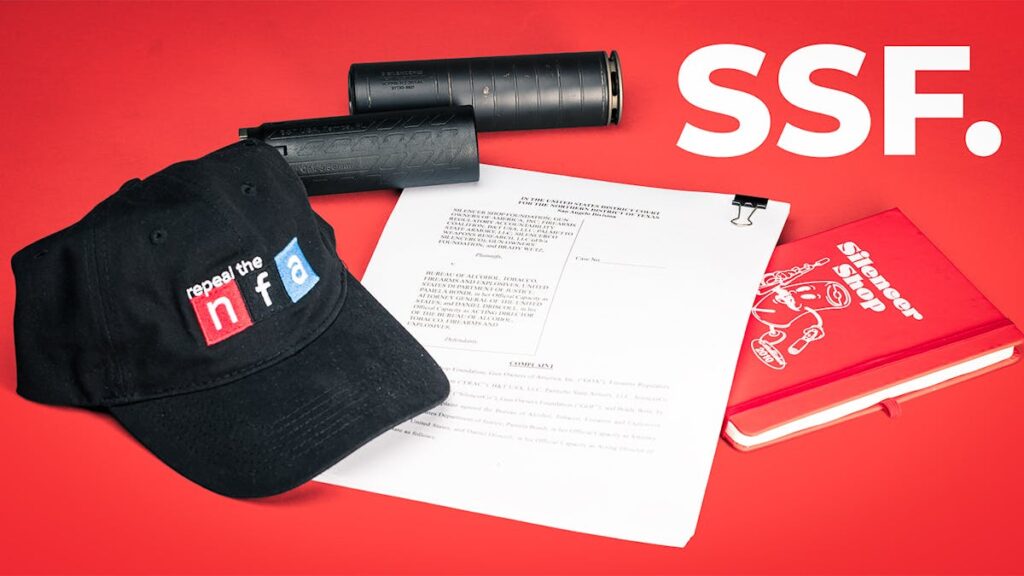
A coalition of firearms organizations has launched a significant legal challenge against longstanding federal regulations on gun silencers and short-barreled firearms, marking a potential watershed moment in American gun policy.
The lawsuit, filed against the Bureau of Alcohol, Tobacco, and Firearms, seeks to dismantle key provisions of the 1934 National Firearms Act (NFA) following recent legislative changes that will eliminate the $200 tax on regulated firearms accessories beginning in 2026.
At the heart of the legal challenge is a fundamental constitutional question: With the tax requirement set to expire, does the federal government maintain legitimate authority to regulate these devices? The plaintiffs argue that the imminent removal of the tax provision undermines the entire regulatory framework that has governed these firearms and accessories for nearly nine decades.
The items in question include silencers, short-barreled rifles, short-barreled shotguns, and a category classified as “any other weapon.” Since 1934, these items have been subject to strict federal oversight, including mandatory registration and taxation. The plaintiffs contend that the original constitutional justification for such regulation was rooted primarily in Congress’s taxation powers.
Dave Matheny, representing one of the plaintiff organizations, emphasizes the historical context of the challenge: “Americans once exercised their Second Amendment rights without the burden of extensive federal oversight. The elimination of the tax requirement presents an opportunity to restore those freedoms.”
The lawsuit’s timing coincides with broader national discussions about firearms regulations and constitutional rights. Legal experts note that a favorable ruling could fundamentally reshape federal authority over certain firearms and accessories, potentially dismantling one of the nation’s oldest gun control measures.
The federal registry, maintained for tax compliance purposes, faces particular scrutiny. Legal analysts suggest that without the tax requirement, the government’s authority to maintain such a database becomes constitutionally questionable.
The case represents more than a narrow challenge to specific regulations; it potentially opens the door to broader reforms in federal firearms law. A ruling in favor of the plaintiffs could establish new precedents regarding the government’s authority to regulate firearms and accessories under the Second Amendment.
As this case proceeds through the federal courts, it will likely draw significant attention from both gun rights advocates and gun control proponents, each recognizing its potential to reshape the landscape of American firearms regulation. The outcome could influence firearms policy for generations to come.
This is a developing story that warrants continued attention as it moves through the judicial system. The courts’ interpretation of these constitutional questions will have far-reaching implications for both firearms regulation and federal authority in matters of gun control.
