
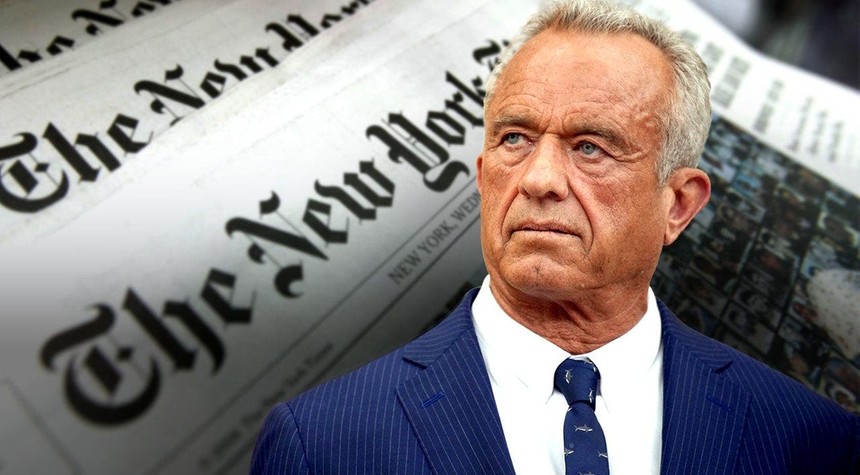
Health and Human Services Secretary Robert F. Kennedy Jr. has issued a forceful rebuttal to recent reporting that questioned his engagement with the sprawling federal health agency, calling the coverage a “hit piece” driven by predetermined conclusions rather than objective journalism.
The dispute centers on a report published this week that portrayed Kennedy as minimally engaged with the vast portfolio of responsibilities under his purview, particularly during the recent Ebola outbreak in Africa that exposed at least six Americans to potential infection.
Kennedy took direct aim at the sourcing methods employed in the article, specifically the reliance on anonymous current and former employees. In his written response, the secretary suggested that many of these unnamed sources had been terminated from their positions or had resigned to avoid dismissal.
“In order to prove your preconceived case for my disengagement, you quote anonymous employees, some of whom I fired or who quit to avoid being fired,” Kennedy stated. “You had a preconceived thesis, and you set out to prove it.”
The original report alleged that Kennedy has demonstrated little interest in managing the operational details of the department, instead focusing narrowly on specific priorities including food recommendations, pesticide exposures, and investigating his longstanding concerns about vaccine safety. The article characterized Kennedy as “deeply mistrustful” of career civil servants and suggested he has isolated himself from much of the department’s senior leadership.
According to the report, Kennedy has made only one known visit to the Centers for Disease Control and Prevention headquarters in Georgia, which occurred following a shooting incident at the facility that resulted in the death of a police officer.
Kennedy disputed this characterization of his leadership, countering that he inherited a department where the vast majority of employees were not reporting to their offices. “When I took this job, the building was empty. About 90% of the employees were not coming to work. I changed that, but your newspaper never covers my reforms,” he wrote.
The secretary also drew an unfavorable comparison to his predecessor, claiming that the previous officeholder was rarely present at the department during his four-year tenure, a fact he says went unreported.
The controversy unfolds against a backdrop of significant personnel changes at the department. More than one thousand employees have reportedly demanded Kennedy’s resignation following his decision to dismiss the CDC director and implement substantial organizational changes. Additionally, numerous veteran health experts and scientists have departed the agency in recent months, with several major positions remaining unfilled.
Kennedy’s tenure has been marked by his stated commitment to reforming what he views as a dysfunctional bureaucracy, though critics contend his management approach has created instability within agencies responsible for protecting public health.
The exchange highlights ongoing tensions between the administration and elements of the media, with questions of journalistic standards and the use of anonymous sources taking center stage. Kennedy specifically criticized what he termed the devolution of journalistic standards, particularly the practice of building narratives around unnamed sources with potential axes to grind.
As the nation’s top health official, Kennedy oversees a department with a budget exceeding one trillion dollars and responsibilities ranging from disease prevention to medical research to social services programs affecting millions of Americans.
Related: Pentagon Implements Shelter-in-Place Order Following Air Quality Detection
