
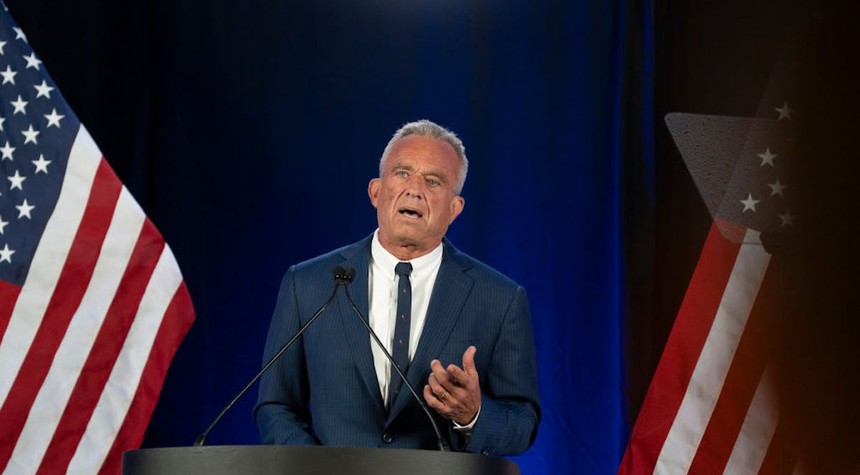
NASHVILLE, Tenn. — Health and Human Services Secretary Robert F. Kennedy Jr. arrived in Tennessee this week with a message about personal responsibility and government transparency in healthcare, meeting with state Republican leaders to address what has become an uncomfortable truth for the Volunteer State.
Tennessee ranks 44th in the nation for overall health outcomes. The state faces troubling rates of infant mortality, obesity, diabetes, drug overdoses, and preventable hospitalizations. For a state that prides itself on leading the nation in many areas, these statistics represent a serious challenge that Kennedy and Tennessee’s Republican leadership believe can be addressed without compromising individual liberty.
Kennedy’s appearance at the state capitol Wednesday, part of his Take Back Your Health tour, drew a packed crowd of lawmakers and invited guests to the old Tennessee Supreme Court chambers. Senate Majority Leader Jack Johnson acknowledged the difficult reality facing his state.
“Tennessee is leading the nation in many ways, and there’s a lot of things we can brag about. But when we’re doing that, you should also acknowledge areas where we need to do better. And one of those is with regards to our health outcomes,” Johnson said.
The Health Secretary outlined several initiatives the Trump administration has launched to address these concerns. Among them are investments in rural healthcare, removal of harmful additives from food products, increased pricing transparency in medical services, and studies examining the dramatic increase in autism diagnoses.
Kennedy emphasized that the administration’s approach centers on empowering Americans with information rather than imposing restrictions. President Trump has made clear his intention to make every patient the chief executive of their own healthcare decisions, Kennedy said, ensuring Americans have access to the information they need to make informed choices.
The federal government currently spends approximately $405 million daily subsidizing meals through school lunch programs, the Supplemental Nutrition Assistance Program, and other federal food assistance initiatives. Kennedy argued that raising nutritional standards for these programs would transform the quality of food recipients receive while simultaneously helping farmers produce what he termed “real food.”
This philosophy informed the recent decision by the Department of Health and Human Services to revise the food pyramid last month. The new guidelines recommend whole foods, prioritize healthy fats and protein, and suggest limiting or avoiding ultra-processed foods.
“Our job is not to tell Americans what to eat. It’s to tell them what’s good for them and to give them good information. If you want to drink a Coca-Cola or eat a Krispy Kreme donut, you live in America, you ought to be able to do that. But we’re going to tell you what the cost is. It seems cheap at the grocery store but the long term costs may not be worth it,” Kennedy said.
The Health Secretary received a warm welcome from the assembled lawmakers and guests, though a small group of hecklers gathered outside the chamber to protest some of Kennedy’s positions on vaccines.
Governor Bill Lee and other Republican leaders joined Kennedy for the meeting, signaling state-level support for federal initiatives aimed at improving health outcomes. The collaboration between federal and state officials represents an effort to address Tennessee’s health crisis while respecting what Johnson and Kennedy both characterized as traditional American values of personal choice and individual responsibility.
The question now facing Tennessee is whether better information and improved food standards in government programs can reverse decades of troubling health trends in a state that has struggled to match its economic and cultural achievements with comparable success in public health.
Related: Congress Faces Tight Deadline on Homeland Security Funding After Shutdown Deal
