
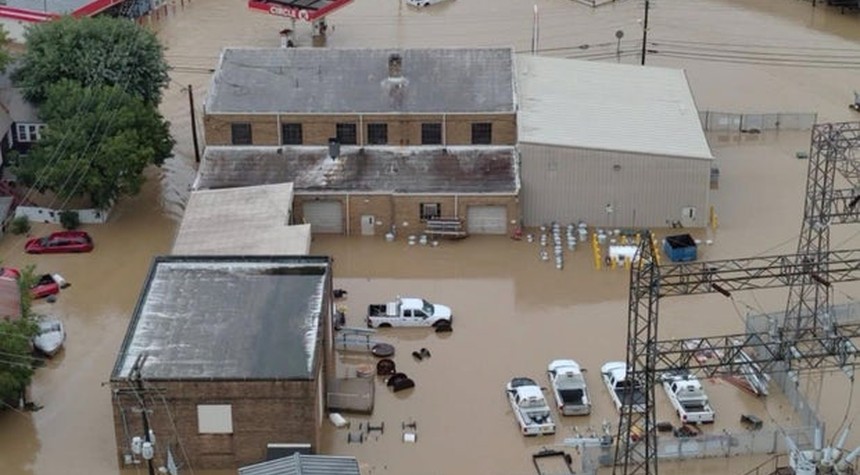
Historic flooding has devastated communities across Indiana for the second consecutive day, with meteorological stations recording the highest single-day rainfall totals in their operational history. The crisis continues to unfold as weather forecasters warn that additional severe storms threaten to compound the destruction already wrought upon the region.
Thirty-six million Americans across the Midwest remained under flood alerts Thursday, according to the National Weather Service. Forecast offices spanning Kentucky, Illinois, Indiana, Iowa, and Tennessee have issued warnings of persistent and widespread rainfall that could deposit an additional four inches or more across affected areas. The anticipated weather systems carry the potential for strong winds, large hail, and further flash flooding in communities already struggling to recover from the initial assault.
The scope of the disaster has been substantial. Since Monday, authorities have documented 277 flash flooding incidents across the Ohio Valley. Regional leaders have declared seven separate flash flood emergencies since Tuesday, as deadly storms and tornadoes swept through the area.
Indiana Governor Mike Braun declared a disaster emergency Thursday as a quarter million residents in his state and neighboring Illinois awoke to find themselves without electrical power. The governor pledged full state mobilization in response to the crisis.
“Our state response is fully mobilized, resources are moving where they are needed, and we will continue working around the clock to support every impacted community,” Braun stated.
The human cost of this natural disaster has been sobering. Officials have confirmed at least three deaths connected to the severe weather, including two fatalities in Ohio and one in Indiana. All three deaths occurred on Tuesday.
In Anderson, Indiana, located northeast of Indianapolis, the White River overflowed its banks with devastating consequences for local residents. Charlie Simmons, a 70-year-old homeowner who had completed renovations on his property just two months prior, found himself wading through chest-deep water as floodwaters consumed his residence.
“Financial-wise, I’m cooked,” Simmons reported. “Start again, 70 years old, start over, what are you going to do.”
Tony Smith, also of Anderson, lost both his home and his business to the rising waters. “We are totally devastated,” Smith said. “We have had five feet plus of water in all of our homes here.”
The East Madison Fire Territory, serving Madison County which includes Anderson, responded to what it characterized as historic flooding levels. The department issued urgent warnings to residents living near rising water to develop evacuation plans while escape routes remained accessible, noting that additional precipitation was forecast for Thursday evening.
Cambridge City, Indiana, witnessed catastrophic flooding Wednesday that necessitated boat rescues for stranded residents. Municipal streets transformed into waterways, with water levels rising several feet in the most severely affected areas. Ground floors of homes across the community took on water, while some residents confronted even more dire circumstances.
The meteorological forecast offers little reprieve. Indianapolis faces particular risk as the greatest threats of incoming storm systems remain concentrated on the state capital. The persistent nature of this weather pattern suggests that recovery efforts may be hampered by ongoing precipitation throughout the remainder of the week.
This developing situation underscores the unpredictable power of natural forces and the resilience required of American communities when confronted with such challenges.
Related: Eight-Year-Old’s Unusual Catch Draws Attention to Illegal Release of Exotic Species
