
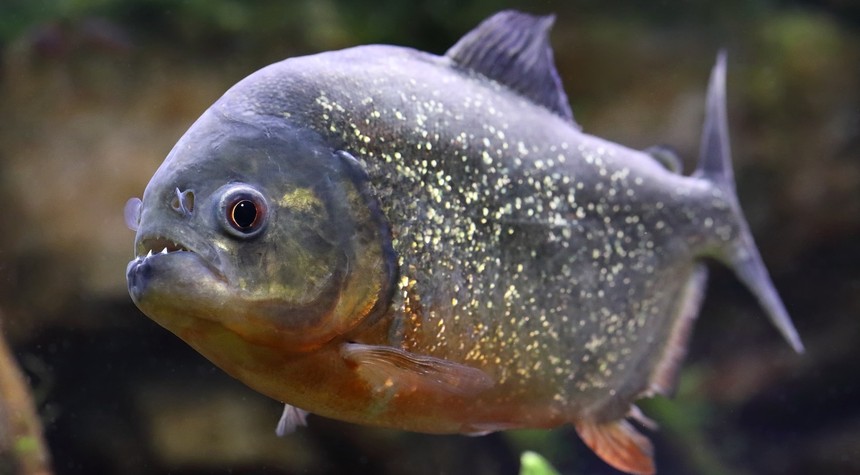
An unusual catch at a Pennsylvania lake has brought renewed attention to a persistent problem confronting wildlife officials across the nation: the illegal release of exotic pets into local waterways.
Eight-year-old Seamus Coffey was fishing with his father, Michael, at a lake near Ridley Park on Saturday morning when he hooked what initially appeared to be a large bass. The reality proved far more extraordinary.
“I’m reeling it in, and I think there’s a bass,” the young angler recounted. His father urged caution, recognizing something unfamiliar about the catch. When the fish emerged from the water, its distinctive features became unmistakable. Seamus identified it immediately as a piranha, crediting his knowledge to educational videos he had watched online.
The Pennsylvania Fish and Boat Commission subsequently confirmed the identification, verifying that the specimen belonged to a piranha species native to South America’s tropical waters.
Mike Parker, a spokesman for the commission, acknowledged that while the incident provided the father and son with a memorable fishing story, it underscored a troubling trend. Individuals who purchase exotic animals as pets often find themselves unable or unwilling to maintain them as the creatures grow larger and their care becomes more demanding and expensive.
“I think a lot of times people have a dream of owning an exotic fish or a snake or an alligator, and it’s appealing when the animal is small,” Parker explained. “But when they can no longer afford the expense or provide adequate housing, they decide to make it someone else’s problem.”
This approach, Parker emphasized, represents the worst possible outcome for the animals involved. The piranha caught by young Seamus would not have survived long in Pennsylvania’s waters, far removed from its natural habitat and lacking the survival skills necessary for life in the wild after living in captivity.
The commission spokesman stressed that exotic pets require lifelong commitment, specialized habitats, particular dietary needs, and considerable financial investment. When owners abandon these responsibilities by releasing animals into local waterways, they not only endanger the creatures themselves but also threaten public safety and local ecosystems.
Michael Coffey reported that he disposed of the fish humanely, a decision Parker confirmed was correct given the potential dangers the animal posed. The piranha’s presence in Pennsylvania waters violated state law, which expressly prohibits the introduction of exotic species into the wild. Violators face fines and potential prosecution, regardless of whether they legally own the exotic pet in question.
The incident serves as a stark reminder of the consequences that follow when individuals fail to consider the long-term implications of exotic pet ownership. Wildlife officials continue to urge prospective owners to thoroughly research the demands of caring for such animals before acquiring them, and to contact appropriate authorities if they find themselves unable to continue providing care.
As for Seamus Coffey, the encounter with a razor-toothed predator did nothing to diminish his enthusiasm for his favorite pastime. Fishing, he declared, remains his number one hobby, and this experience has simply added another chapter to what he described as a series of remarkable fishing adventures.
Related: Florida Woman Loses Arm in Silver River Alligator Attack
