
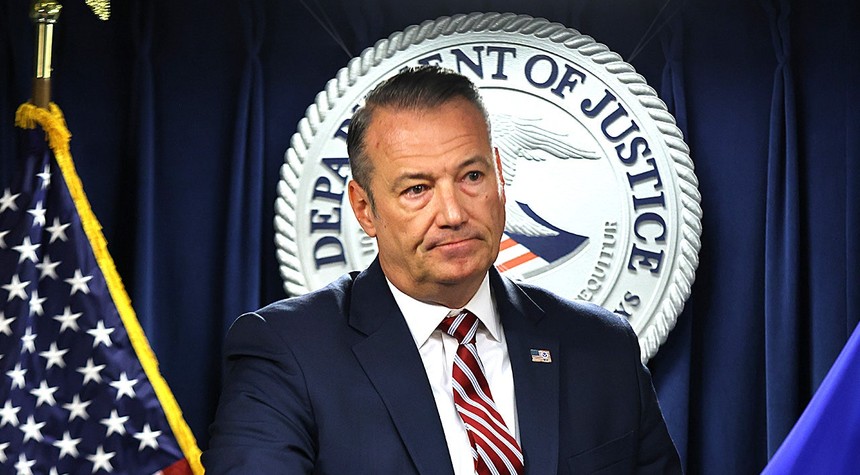
Acting U.S. Immigration and Customs Enforcement Director Todd Lyons disclosed striking figures during Senate testimony Thursday, revealing that approximately 1.6 million illegal immigrants currently residing in the United States are living under final deportation orders. Of that number, roughly 800,000 possess criminal convictions.
Lyons presented these figures before the Senate Homeland Security and Governmental Affairs Committee, offering what amounts to one of the most comprehensive public accountings of unenforced immigration orders in recent memory.
The acting director emphasized an important procedural distinction regarding these deportation orders. They have not originated from ICE or the Department of Homeland Security directly. Instead, Lyons explained, the orders have been issued through immigration judges within the Department of Justice, operating separately from Immigration and Customs Enforcement operations.
This clarification underscores the complex nature of America’s immigration enforcement system, where judicial proceedings and executive enforcement functions operate through different channels of government authority.
The scale of unenforced deportation orders extends throughout the nation. Lyons specifically noted that Minnesota alone accounts for 16,840 final orders that remain outstanding, illustrating how this challenge affects communities across the country, not merely border states or major metropolitan areas.
The revelation that half of those living under deportation orders have criminal convictions raises significant questions about public safety and the effectiveness of current enforcement priorities. These are individuals who have not only entered or remained in the country illegally but have also been convicted of crimes under American law and subsequently ordered removed by federal immigration judges.
The gap between judicial orders and their execution represents a fundamental challenge to the rule of law. When courts issue final orders that go unenforced for extended periods, it undermines both the judicial process and the integrity of the immigration system itself.
During his testimony, Lyons defended the agency’s operational focus on targeting criminal illegal aliens, though the statistics he presented suggest the magnitude of the task exceeds current enforcement capacity by a considerable margin.
The figures disclosed Thursday provide concrete data to what has been a contentious policy debate. For years, discussions about immigration enforcement have often proceeded without clear public understanding of how many individuals are living in the country under final removal orders, let alone how many of those individuals have criminal histories.
These numbers will likely inform congressional deliberations on immigration policy and enforcement funding. They present lawmakers with quantifiable evidence of the gap between the immigration system’s judicial determinations and the executive branch’s capacity to carry out those determinations.
The testimony comes at a time when immigration enforcement remains among the most politically divisive issues facing the nation, with fundamental disagreements about both policy priorities and resource allocation. What cannot be disputed, however, are the facts Director Lyons placed on the record: 1.6 million final deportation orders, 800,000 criminal convictions, and a system struggling to reconcile judicial authority with enforcement reality.
Related: Two Navy Ships Collide During Caribbean Resupply Operation
