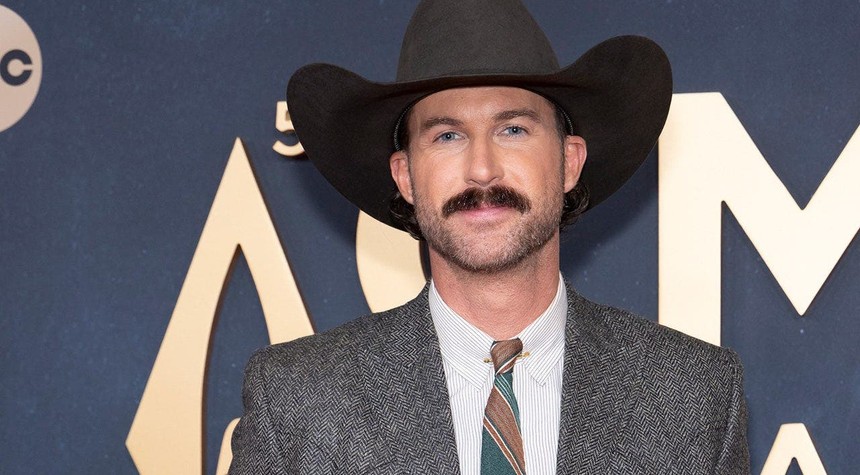
Riley Green, one of country music’s most prominent performers in recent years, has revealed that his departure from college was driven not by artistic ambition but by family necessity.
In a recent interview, the “Jesus Saves” singer clarified the circumstances that led him away from Jacksonville State University, where he had played quarterback for the football team. The decision that would ultimately launch his entertainment career began with his father’s medical emergency.
“You make it sound really poetic, like I busted out of school and went and made a music career. It was nothing like that,” Green explained when asked whether he had left his education to pursue music. “I was playing football, and my dad framed houses and he had back surgery, and him and his brother worked together. So, I took a semester off to go help do construction work.”
What began as a temporary leave to assist his family gradually evolved into something more permanent. Green started performing music occasionally on weekends while continuing his construction work. The semester off turned into a longer absence. Eventually, he simply never returned to complete his studies.
“I assumed I was going to frame houses for the rest of my life and play a little music on the side,” Green said, adding with characteristic humor that he still might grow a long ponytail someday.
The unplanned career trajectory has proven remarkably successful. Green has established himself as a dominant presence in country music over the past several years, building a loyal following with his authentic sound and relatable lyrics.
Last week, Green released his latest album “That’s Just Me,” continuing his momentum in an industry where he has become an unstoppable commercial force. His rise demonstrates how life’s most significant turning points often arrive without announcement or deliberate planning.
The story serves as a reminder that major life decisions frequently occur not through carefully calculated risks but through responding to immediate circumstances and remaining open to unexpected opportunities. What Green thought would be a brief pause in his education to help his injured father became the foundation for an entirely different future.
Green’s journey from college athlete to construction worker to chart-topping musician illustrates a fundamental truth about success: It rarely follows the script we imagine for ourselves. His willingness to step away from his planned path when family needed him, combined with his continued pursuit of music as a side interest, created conditions for something he had not originally envisioned.
The country star’s candid discussion of his origins stands in contrast to more romanticized narratives of artists who dramatically abandon security to chase their dreams. Green’s experience was more modest and more common—a young man helping his family, finding joy in weekend performances, and gradually discovering that what began as a hobby could become a livelihood.
That such an unassuming beginning has led to significant professional achievement speaks both to Green’s talent and to the unpredictable nature of opportunity in America. Sometimes the most important choices we make are the ones we do not recognize as pivotal at the time.
Related: Two University of Mississippi Students Dead in Suspected Drug Overdoses