
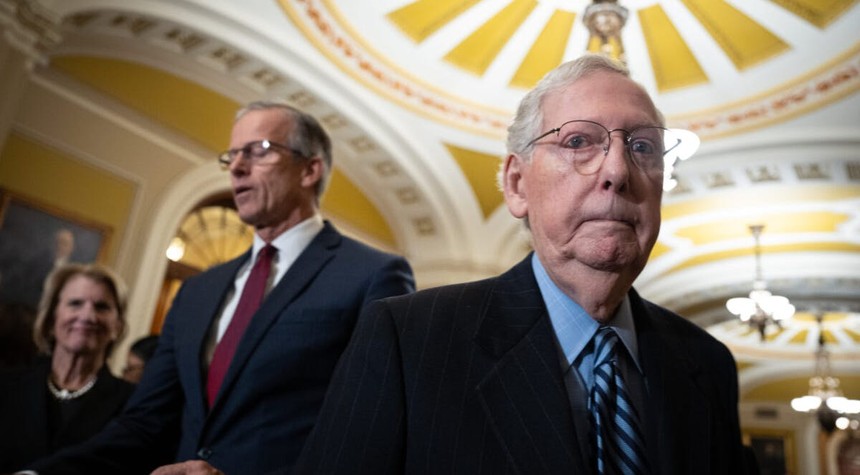
A significant fracture within the Republican Party emerged into public discourse this week as President Donald Trump and multiple House Republicans directed sharp criticism toward Senate Minority Leader Mitch McConnell over the stalled SAVE America Act. The legislation, which proponents describe as essential to securing federal elections, has languished in the Senate while tensions between the party’s leadership factions have escalated.
The dispute represents a departure from traditional Republican unity, with internal disagreements now playing out in full public view rather than through the customary channels of private negotiation. President Trump has taken to social media to criticize the Kentucky senator, while several House members have questioned both McConnell’s motivations and his fitness to lead.
Among the most direct criticisms came from Representative Ralph Norman of South Carolina, who appeared on SiriusXM radio to deliver an unusually candid assessment of the Senate leader. Norman stated plainly that McConnell “hates Donald Trump” and suggested the longtime senator “should be in a nursing home” rather than occupying a position where he can obstruct legislation. The South Carolina congressman further accused McConnell of being “beholden to special interests” and called for new leadership along with congressional term limits.
Such public rebukes from one Republican officeholder to another remain relatively uncommon, particularly when directed at a figure of McConnell’s stature and tenure. The Kentucky senator has served in the Senate since 1985 and has led his conference through multiple administrations. However, Norman’s comments appear to reflect broader dissatisfaction among Trump-aligned Republicans regarding the SAVE Act’s lack of movement through the upper chamber.
The SAVE America Act has become a focal point for Republicans who maintain that additional safeguards are necessary to ensure election integrity. Supporters of the legislation argue that federal elections require enhanced security measures, though specifics of the bill’s provisions have been debated within the party.
The public nature of this dispute signals a potentially significant shift in Republican Party dynamics. Historically, disagreements within the conference were managed through internal discussions, with public unity maintained regardless of private disagreements. The current situation suggests that dynamic may be changing, particularly as Trump-aligned members grow increasingly willing to challenge establishment figures.
McConnell has not issued extensive public responses to the criticisms, maintaining his characteristic reserve in the face of intraparty conflict. His office has not provided detailed explanations for the bill’s delay in the Senate, leaving his critics to speculate about his reasoning.
The tension surrounding the SAVE Act reflects larger questions about the direction of the Republican Party and the influence various factions will wield going forward. As the 2024 election cycle progresses, these internal divisions may prove consequential for the party’s ability to present a unified front to voters.
Whether this public airing of grievances will prompt action on the stalled legislation or further entrench positions remains to be seen. What is clear is that the traditional deference to senior leadership within the Republican conference appears to be eroding, replaced by a more confrontational approach from members who feel their priorities are not being adequately addressed.
The coming weeks will likely determine whether party leaders can bridge these divisions or whether the fracture will deepen further.
Related: NASA Chief Details Plan to Return American Astronauts to Lunar Surface
