
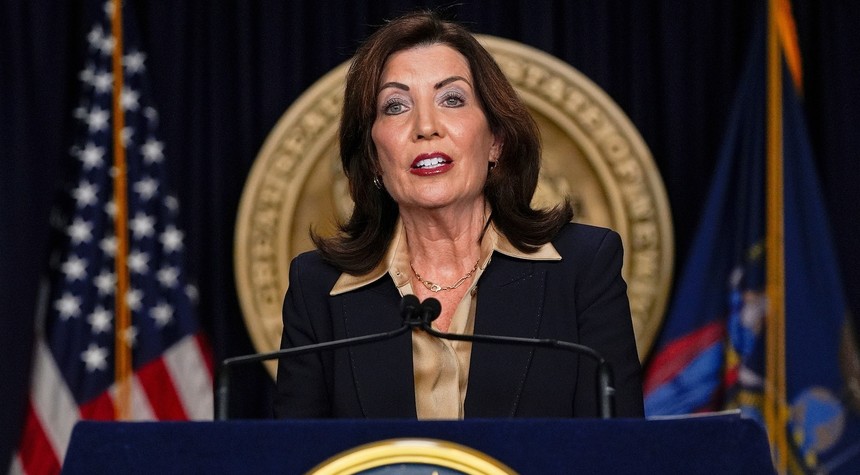
New York Governor Kathy Hochul announced Tuesday a statewide moratorium on hyperscale artificial intelligence data centers, making New York the first state in the nation to impose such restrictions on the rapidly expanding technology infrastructure.
The governor delivered the announcement during a press conference in New York City, citing immediate concerns about the substantial demands these facilities place on the state’s resources and electrical grid.
“That is why today I will be signing the nation’s first-ever statewide moratorium on hyperscale data centers,” Hochul stated during the Tuesday morning briefing.
Hyperscale data centers serve as the backbone for artificial intelligence operations, providing the massive computing power required to process enormous volumes of data. These facilities typically contain thousands of computer servers spread across extensive properties. The operational requirements are substantial: vast tracts of land, significant water resources for cooling systems, and tremendous amounts of electrical power.
The governor emphasized that these resource demands pose a direct threat to New York’s existing infrastructure and could impose financial burdens on the state’s residents.
“These hyperscale AI data centers consume enormous amounts of power, truly threatening to outpace our grid’s capacity, and they drive up costs for local ratepayers,” Hochul explained. She continued, “I refuse to let those costs be passed on to New Yorkers who already pay too much for their utility bills.”
The concern over energy costs carries particular weight in New York, where residents already face some of the highest electricity rates in the nation. According to the Empire Center, a nonprofit think tank specializing in public policy analysis, New York ranks fourth among all states for energy costs.
An additional concern surrounding these facilities involves their employment footprint. Despite their massive physical presence and resource consumption, hyperscale data centers employ relatively few workers on a long-term basis compared to their overall size and economic impact.
The moratorium represents a significant development in the ongoing national conversation about artificial intelligence infrastructure and its relationship to existing power grids and natural resources. As AI technology continues its rapid expansion across multiple sectors of the economy, states face mounting pressure to accommodate the physical infrastructure required to support these systems while balancing the needs of residential and commercial ratepayers.
The decision places New York at the forefront of state-level regulation of AI infrastructure, potentially setting a precedent for other states grappling with similar concerns about resource allocation and grid capacity. Whether other states will follow New York’s lead remains to be seen, but the announcement signals growing scrutiny of the physical and economic costs associated with the artificial intelligence revolution.
The moratorium’s specific duration and the criteria that must be met before it could be lifted were not immediately detailed in the governor’s announcement.
Related: Family of Texas Teen Who Drowned Demands Full Investigation After Evidence Tampering Charges
