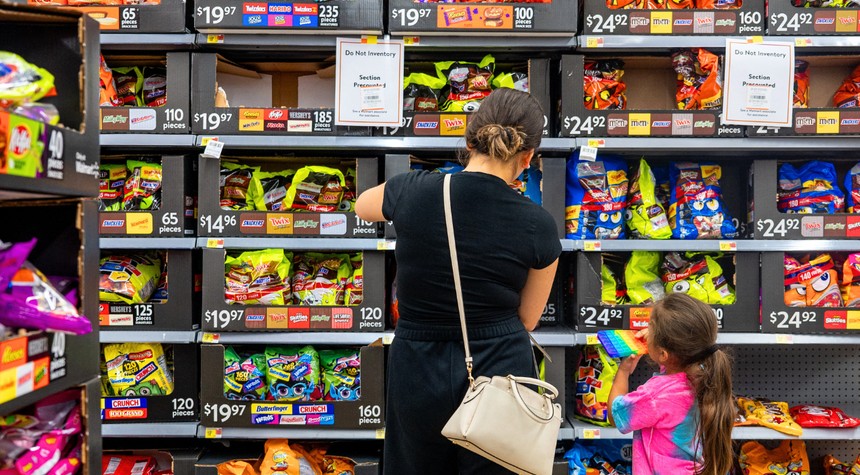
Americans will spend a record amount on Halloween this year despite candy prices rising at more than twice the rate of overall inflation, according to recent economic data and retail forecasts.
The Bureau of Labor Statistics reports that candy prices increased 7.7 percent over the year through September, significantly outpacing the 3.7 percent overall inflation rate during the same period. The figure encompasses candy and chewing gum broadly, though the trend applies directly to Halloween preparations now underway across the country.
Yet higher prices have not deterred consumers from making Halloween a spending priority. The National Retail Federation projects Americans will spend $4.1 billion on candy this year as part of $13.5 billion in total Halloween spending, a record figure. The federation’s survey found that 96 percent of Halloween shoppers intend to purchase sweets.
“Consumers continue to make Halloween a spending priority, but they are also approaching the season with affordability in mind,” stated Allison Zeller, the National Retail Federation’s Vice President of Industry and Consumer Insights.
The data reveals how Americans are adjusting their shopping behavior in response to price pressures. Thirty-one percent of shoppers plan to comparison shop if prices exceed expectations, while 26 percent will actively seek coupons or sales. Retailers have responded by offering products across varied price points to accommodate different budgets, according to Zeller.
Market research firm NIQ notes that rising costs for housing, transportation, and everyday essentials are influencing spending decisions throughout the economy. However, Halloween remains an occasion consumers are determined to celebrate, demonstrating resilience in discretionary spending for traditional observances.
Last year’s sales figures support this conclusion. Halloween confectionery sales increased 7.6 percent in 2024 even as unit sales declined 2.5 percent, indicating that shoppers spent more money while purchasing fewer items. Chocolate experienced the steepest average unit-price increase among confectionery categories tracked by NIQ, rising 11.5 percent.
“Consumers continue to make room for Halloween. What’s changing is how they participate,” explained Chris Costagli, NIQ’s Vice President of Food and Beverage Thought Leadership. Shoppers are beginning their purchases earlier, spreading spending across multiple shopping trips, and evaluating items more carefully before making decisions.
The economic picture presents a familiar pattern for American families navigating inflation’s impact on traditional celebrations. While the cost of participation has increased measurably, the willingness to maintain holiday traditions remains largely intact. The adjustment comes not in abandoning the holiday but in modifying purchasing strategies to accommodate higher prices.
This Halloween spending occurs against a backdrop of broader economic concerns. Families already managing increased costs for necessities are now incorporating holiday expenses into tighter household budgets. The candy price increases serve as another reminder of inflation’s persistent presence in daily American life, reaching even into seasonal celebrations that many consider essential to family tradition.
Related: Anthropic Files for Public Offering as AI Industry Faces Critical Market Test