
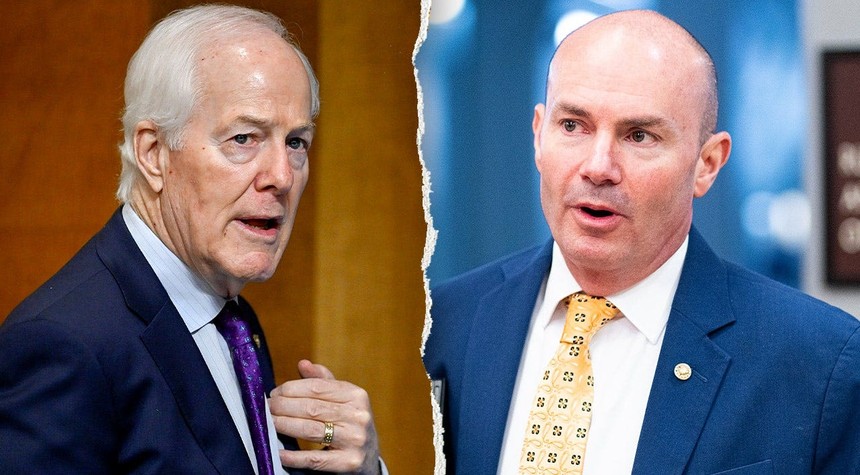
Senate Republicans find themselves at an impasse over legislation that would require proof of citizenship for voter registration, with internal divisions now spilling into public view as President Trump continues to press for action.
The Safeguarding American Voter Eligibility Act, known as the SAVE America Act, would establish citizenship verification requirements for individuals registering to vote in federal elections. President Trump has made passage of this legislation a priority, urging Republican senators to employ procedural tactics to overcome Democratic opposition.
The central dispute within the Republican conference concerns the use of what is known as a “talking filibuster,” a parliamentary maneuver that would require senators to maintain continuous debate on the Senate floor. Proponents argue this approach would eventually exhaust Democratic resistance and allow the legislation to pass with a simple majority vote rather than the sixty votes typically required to advance major legislation.
Senator Mike Lee of Utah has emerged as a leading advocate for this strategy. He contends that Republicans possess the procedural tools necessary to pass the SAVE America Act if they demonstrate sufficient resolve. According to this view, the talking filibuster would force Democrats to publicly defend their opposition to citizenship verification requirements while Republicans maintain unified support for the measure.
However, Senator John Cornyn of Texas has articulated significant reservations about this approach, representing a faction within the Republican conference that views the talking filibuster as strategically unsound. In a memorandum circulated among colleagues, Cornyn outlined several practical concerns.
Chief among these is the question of Senate floor time, which represents the chamber’s most limited resource. A protracted filibuster battle could consume weeks or even months, effectively halting progress on other legislative priorities. Cornyn noted that no historical precedent exists for a talking filibuster successfully producing a favorable outcome for the side initiating it.
Additional concerns include the burden on senators who would face mandatory attendance requirements during an extended floor debate, potentially interfering with campaign activities in an election year. Perhaps more significantly, the minority party would retain the right to force votes on unlimited amendments, potentially placing Republicans in politically difficult positions on divisive issues.
The disagreement between Lee and Cornyn has moved beyond private conference meetings to public exchanges on social media, an unusual development that underscores the depth of division within the Republican caucus.
Lee has characterized Cornyn’s objections as illustrative of precisely why the talking filibuster strategy merits consideration. While acknowledging the procedural challenges, Lee argues they are manageable and could even strengthen the Republican negotiating position if senators demonstrate willingness to utilize available parliamentary tools rather than preemptively surrendering.
The fundamental question facing Senate Republicans is whether the potential benefits of forcing a public debate on citizenship verification outweigh the risks of ceding control over the Senate’s legislative schedule to the Democratic minority.
This internal Republican debate occurs against the backdrop of unified Democratic opposition to the SAVE America Act. Democrats argue that existing law already prohibits non-citizens from voting in federal elections and that additional verification requirements would create unnecessary barriers to legitimate voter registration.
The outcome of this dispute will likely determine not only the fate of the SAVE America Act but also establish precedent for how aggressively Senate Republicans are willing to employ procedural tactics to advance their legislative agenda in a closely divided chamber.
Related: Pentagon Insider Says Officials Plotted to Silence UFO Witnesses
