
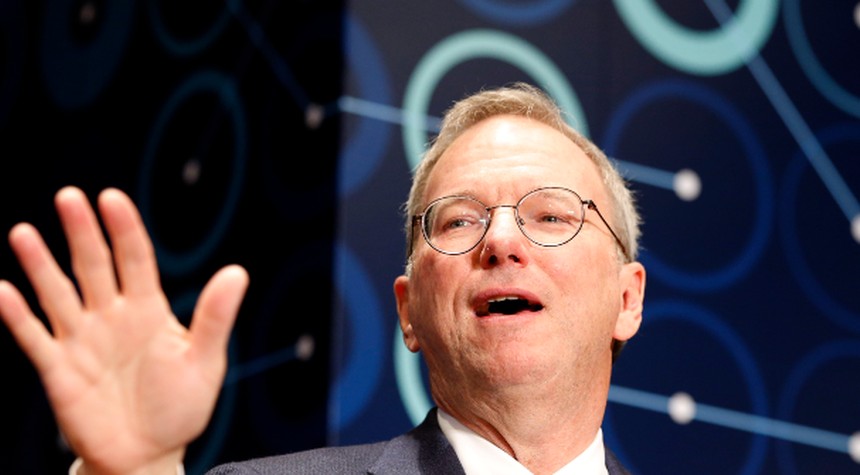
Former Google executive and tech billionaire Eric Schmidt faced audible disapproval from graduating students at the University of Arizona this weekend when he rejected calls for immigration reform in response to widespread job losses caused by artificial intelligence.
Schmidt, now a prominent tech investor and political donor, urged the graduates to embrace both AI technology and continued high levels of immigration, despite growing concerns that American workers are bearing the brunt of rapid technological displacement.
“America is at its best when we are the country that ambitious people want to come to,” Schmidt told the assembled graduates Sunday. He encouraged them to “choose equality” and “choose a diversity of perspectives, including the perspective of the immigrant who has so often been the person who came to this country and made it better.”
The response from the audience was immediate and unmistakable. Loud booing interrupted Schmidt’s remarks, forcing him to acknowledge the discontent. “I can hear you, there is a fear,” he said, attempting to address the opposition to his message.
The reaction reflects mounting anxiety among American workers and recent graduates who face an increasingly uncertain job market. The technology sector, once considered a reliable path to middle-class prosperity, has experienced significant layoffs as companies implement AI systems to replace human workers.
Mark Krikorian, director of the Center for Immigration Studies in Washington, offered a sharp critique of Schmidt’s position. “It is perfectly natural that businesses want both AI to improve productivity and immigration to keep labor cheap, but as a policy matter, they need to choose one or the other,” Krikorian said. “Congress needs to tell them: Choose one or the other. You don’t get both.”
The debate over immigration policy and technological advancement has taken on new urgency as major corporations simultaneously pursue AI implementation while advocating for expanded immigration programs. Critics argue this dual approach serves corporate interests at the expense of American workers who face displacement from both automation and competition for remaining jobs.
Schmidt’s comments come as the technology industry continues to implement significant workforce reductions. Companies across Silicon Valley have announced tens of thousands of layoffs over the past year, with many citing AI capabilities as enabling them to operate with fewer employees.
The billionaire’s message to graduates about embracing immigration appeared particularly tone-deaf to an audience preparing to enter a challenging job market. The booing suggests a growing disconnect between tech industry leadership and the concerns of ordinary Americans facing economic uncertainty.
Financial industry leaders have also weighed in on the relationship between immigration and artificial intelligence, with BlackRock founder Larry Fink recently describing it as a fundamental tradeoff in workforce planning.
The incident at the University of Arizona underscores a broader tension in American policy discussions. While business leaders like Schmidt advocate for maintaining high immigration levels alongside rapid AI adoption, workers and their advocates increasingly question whether such policies serve the national interest or merely corporate bottom lines.
As artificial intelligence continues to advance and reshape the American economy, the question of how to protect American workers while maintaining technological progress remains unresolved. The heated response to Schmidt’s remarks suggests this debate will only intensify in the months ahead.
Related: Illinois Governor Publicly Rebukes Chicago Mayor Over Failure to Retain Bears
