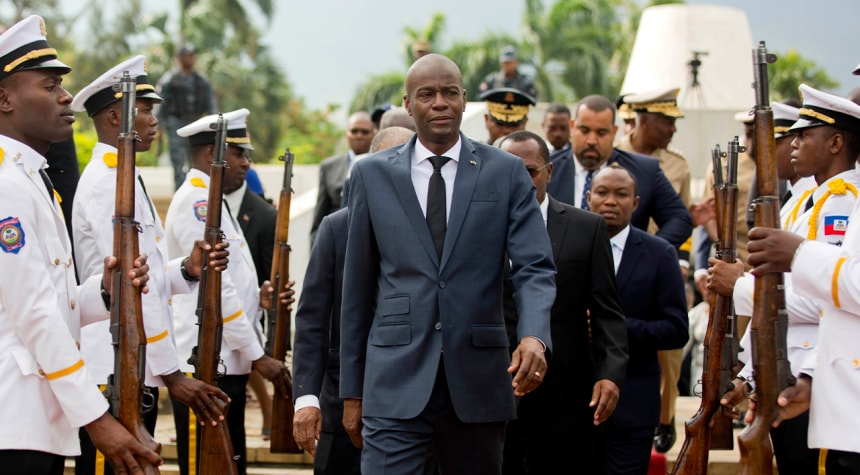
A federal jury in Miami has convicted a Florida pastor on all charges related to the assassination of Haitian President Jovenel Moïse, concluding a complex case that reveals how American territory was used to plot the murder of a foreign head of state.
Christian Emmanuel Sanon, a dual Haitian-American citizen who served as a pastor, was found guilty Wednesday on eight federal charges following a trial that lasted nearly eight weeks. He faces a maximum sentence of life in prison when he appears for sentencing on February 10.
The case presents a troubling picture of international conspiracy planned and financed from American soil. Federal prosecutors demonstrated that South Florida served as the operational headquarters for this plot, which involved approximately two dozen foreign mercenaries whose payments came partly from fraudulently obtained federal pandemic relief funds, money that had been designated to help American businesses weather the economic storm of the coronavirus.
According to the evidence presented at trial, the conspiracy took shape in April 2021 when Sanon met with a former Haitian senator and several American businesspeople in South Florida. The group reached an agreement that once Sanon assumed the Haitian presidency, he would award lucrative contracts for infrastructure projects, security forces, and military equipment to two Florida-based companies.
The conspirators proceeded to hire approximately eighteen Colombians with military backgrounds to provide security for Sanon. Over the following months, they acquired weapons and body armor while attempting to establish connections with Haitian criminal gangs.
Prosecutors presented evidence that Sanon actively participated in raising funds for the operation and made arrangements for travel and accommodations in Haiti for himself and other participants in the scheme.
The plot took an unexpected turn in June 2021 when the conspirators determined that Sanon lacked both the constitutional qualifications and popular support necessary to assume the Haitian presidency. At that point, they abandoned him as their candidate and shifted their support to another individual.
Nevertheless, the assassination moved forward. On July 7, 2021, a squad composed primarily of retired Colombian soldiers stormed President Moïse’s residence, killing him and wounding his wife.
Throughout the trial, Sanon maintained his innocence. He acknowledged communicating with individuals seeking to replace the Haitian leader but insisted that the group had moved on to another candidate well before the assassination occurred. His defense attorney indicated that the defense team was disappointed with the verdict and intends to file an appeal.
This conviction represents one piece of a larger federal investigation into President Moïse’s assassination. Sanon is among a dozen defendants convicted in the United States proceedings, with more than forty individuals facing charges overall. Five defendants have already received life sentences. Four additional men were convicted in May of conspiring to kill or kidnap President Moïse, providing material support for the plot, and violating the United States Neutrality Act. They await sentencing and also face possible life imprisonment.
The case raises significant questions about the misuse of federal pandemic relief funds and the ease with which foreign conspiracies can be organized within American borders. As Haiti prepares for a presidential election scheduled for next year, the nation continues to grapple with the violent political instability that led to and followed President Moïse’s murder.
The facts of this case are clear, and the jury has spoken. Justice, though it cannot restore what was lost, has taken its course.
Related: Federal Officials Find No Evidence of Cyberattacks Behind Recent Technology Disruptions