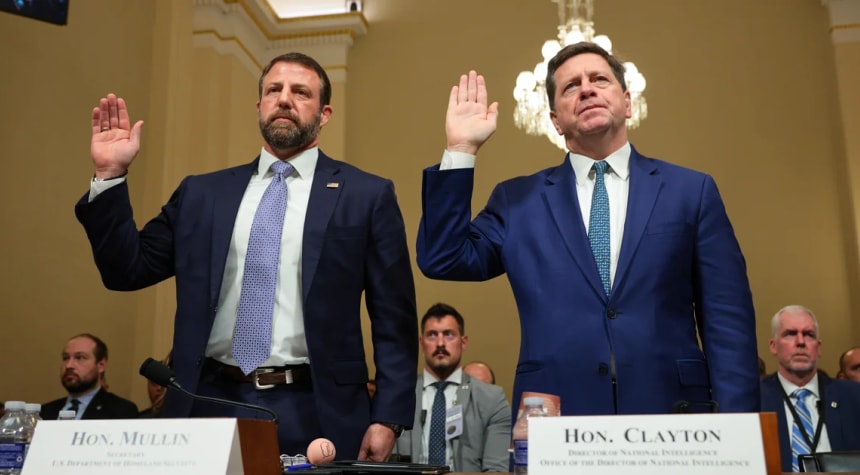
The nation’s top national security officials appeared before Congress Wednesday to address mounting concerns about a troubling pattern of technology disruptions that have affected critical infrastructure across the country. What they had to say offered reassurance, though questions remain about the vulnerability of aging government systems.
Homeland Security Secretary Markwayne Mullin, Director of National Intelligence Jay Clayton, and FBI Deputy Director Christopher Raia testified before the House Homeland Security Committee that investigators have found no evidence linking the separate outages or indicating they resulted from malicious cyberattacks. The disruptions affected airlines, banking institutions, Microsoft services, and even internal communications systems at the National Security Agency.
"We have seen nothing that would indicate that they are related," Secretary Mullin stated plainly. He added that his department had been in contact with private industry partners while reviewing each incident. When pressed further, Mullin acknowledged the unusual nature of the situation, stating he is "98 percent confident" the outages were not the work of foreign adversaries, though he conceded he had not witnessed this many disruptions occurring in such a compressed timeframe during his tenure.
Director Clayton echoed this assessment, explaining that intelligence officials had conducted thorough reviews in consultation with government agencies and private sector cybersecurity experts. "These are separate service outages associated with maintenance and technical changes. They are not a coordinated or state-sponsored attack," Clayton testified.
The FBI’s Deputy Director Raia confirmed that Bureau cybersecurity specialists had examined the incidents from the outset and found no indication of malicious cyber activity. The Bureau, he assured the committee, would continue working with private partners as a precautionary measure.
The hearing took place against a backdrop of genuine public anxiety. The disruptions affected everyday Americans attempting to conduct banking transactions, use essential software services, and most notably, travel by air. A nationwide Federal Aviation Administration ground stop on Friday resulted in widespread airport chaos throughout the weekend. This represented only the second such comprehensive grounding since the terrorist attacks of September 11, 2001.
According to officials, the FAA incident occurred when telecommunications contractor L3Harris Technologies performed maintenance updates at a remote facility, replacing aging copper communications lines with modern fiber optic connections. During the router switchover, the system became overloaded, flooding other routers and bringing the network down.
The NSA outage drew particular scrutiny during the hearing. Representative Dan Goldman of New York challenged Director Clayton’s explanations, pressing for clarity about whether the disruption stemmed from internal software updates or external interference. The exchange grew pointed as Goldman accused Clayton of evasiveness, though Clayton maintained that investigators had found no evidence of outside actors.
Clayton did raise a concern that deserves attention. He warned that advances in computing power and increasingly sophisticated software are placing unprecedented demands on older government technology systems. The accelerating pace of technological development, he suggested, is rendering legacy systems obsolete at an alarming rate.
The hearing also addressed separate but equally concerning reports about potential Iranian threats. Representative Michael Guest of Mississippi questioned officials about the possibility of Iranian sleeper cells operating within American borders and reports suggesting Iranian-linked actors might be developing plans to target senior administration officials with radiological or chemical weapons.
Secretary Mullin acknowledged the concern but emphasized that his department works daily with intelligence and Justice Department officials to identify and disrupt such threats. Director Clayton highlighted the ongoing danger of online radicalization, noting that foreign extremist networks can influence individuals already residing in the United States. "That’s not theoretical; it’s real," he stated, referencing incidents in New York and elsewhere.
Deputy Director Raia offered perspective on intelligence reporting about possible plots, cautioning that such reports often reflect aspirations rather than operational capabilities. Nevertheless, he emphasized that authorities take every threat seriously and have reorganized their Iranian threat mission center to strengthen preventive efforts.
The officials did not publicly confirm whether Iranian sleeper cells are actively preparing attacks on American soil or whether reported plans involving unconventional weapons have progressed beyond the aspirational stage. That is the way of these things.
Related: Charlotte Denies Responsibility for Woman’s Death Aboard Light Rail Train