
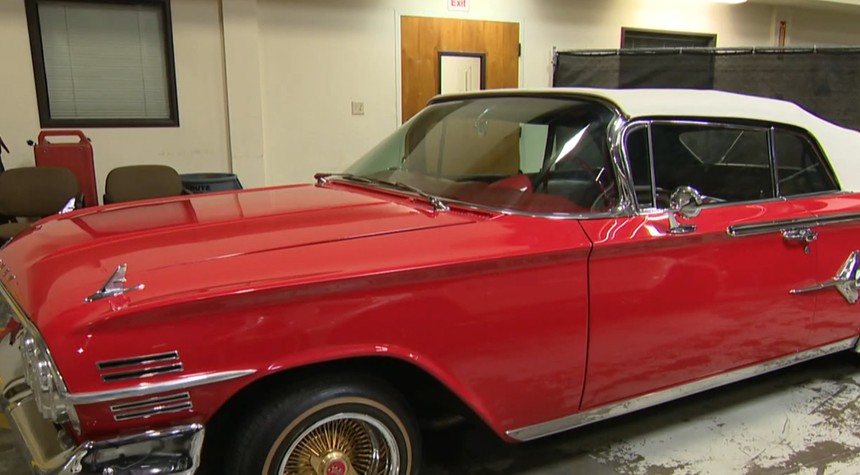
In a federal law enforcement warehouse in Southern California, rows of seized Ferraris and Lamborghinis stand alongside stacks of valuable sports memorabilia, including Mickey Mantle rookie cards and game-worn Kobe Bryant sneakers. These items represent a fraction of the staggering amounts of taxpayer money being diverted through fraud schemes targeting federal programs.
Government estimates indicate that at least $500 billion is lost to fraud each year. However, consultants who work with federal agencies to track fraudulently obtained funds believe the actual figure exceeds $1 trillion annually. The scale of this theft from the American taxpayer is difficult to comprehend, yet the challenge of recovering these stolen funds proves even more daunting.
Bill Essayli, the top federal prosecutor in Los Angeles, stated plainly that every American taxpayer should be offended by those who exploit the system. As the Trump administration intensifies its crackdown on fraud targeting Medicare, food assistance programs, and hospice care, prosecutors face significant obstacles in clawing back stolen money.
Standing in the driveway of an eight-bedroom, ten-bathroom compound on an isolated Orange County hilltop, Essayli described the former residence of convicted serial fraudster Paul Randall. The property exemplifies how criminals live lavishly on stolen taxpayer funds. Randall was convicted of diverting more than $270 million in one of California’s largest Medicaid fraud schemes. He pleaded guilty in April to wire fraud and faces up to thirty years in prison when sentenced this summer.
The case reveals troubling failures in the criminal justice system. Randall was out on bond awaiting sentencing on another federal fraud charge when he initiated this latest scheme. This represented his sixth fraud conviction, yet he had never served substantial prison time. The breakdown in accountability is evident and concerning.
Haywood Talcove, who consults with the government on tracking illicit funds, projects that $1 trillion is lost to fraud annually. His research indicates that approximately seventy percent of these stolen funds end up financing transnational criminal organizations. The money flows to Russia, China, Nigeria, and Romania, among other destinations.
The sophistication of these criminal operations continues to increase. American taxpayers are unwittingly funding transnational criminals who use these resources for child trafficking, drug operations, and activities that threaten democratic institutions. The implications extend far beyond simple theft.
The vast majority of stolen funds leave the country before federal authorities can confiscate them. With criminals easily converting money to digital currency and channeling it overseas, federal agents find themselves at a significant disadvantage.
Essayli emphasized that federal law enforcement is developing improved methods to locate and recover stolen funds. However, the reality remains that prevention must be the priority. Systems must be in place to detect and prevent fraud before money leaves government coffers. Once funds are transferred overseas and converted to cryptocurrency, recovery becomes nearly impossible.
The seized luxury vehicles and memorabilia in that Southern California warehouse tell only a small part of a much larger story about the systematic theft of American taxpayer dollars and the urgent need for more effective safeguards.
Related: Body of Missing Los Alamos Laboratory Worker Found in New Mexico Forest
