
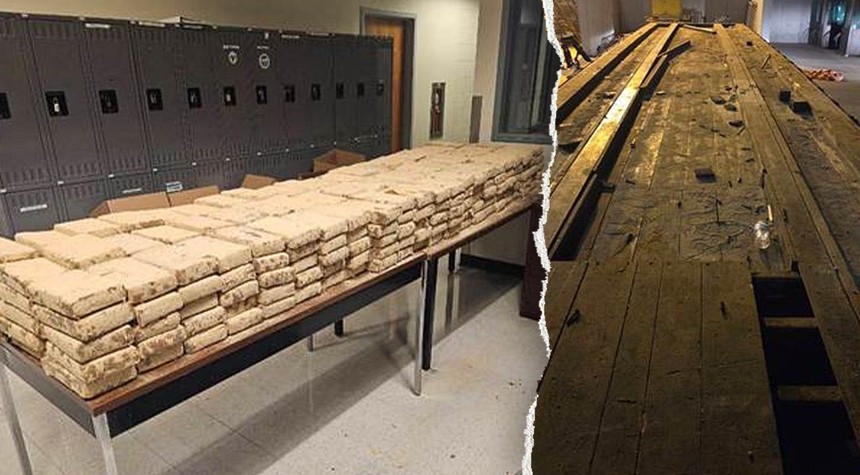
Federal authorities have announced the seizure of more than 1,000 pounds of cocaine at the Calexico Port of Entry, marking one of the most significant drug interdiction operations in Southern California this year.
The Department of Justice reported that officers discovered the cocaine concealed beneath the wooden floorboards of a commercial truck and flatbed trailer as it attempted to cross from Mexico into the United States. Authorities estimate the street value of the seized narcotics exceeds $20 million.
Jose Manuel Lopez, a 44-year-old Mexican national who was the sole occupant of the vehicle, has been arrested and charged with importing cocaine into the United States. The charges carry serious consequences. If convicted, Lopez faces a mandatory minimum sentence of 10 years in federal prison, with a maximum penalty of life imprisonment.
The seizure represents the second-largest cocaine bust in the Southern District of California this year. In court documents filed to justify keeping Lopez in custody pending trial, federal prosecutors characterized the quantity as “a tremendous amount of drugs, even by the standards of this district.” That assessment speaks volumes about the scale of narcotics trafficking along the southern border.
The discovery came during what appeared to be a routine inspection. The trailer was ostensibly carrying 269 bundles of rebar, common construction material. However, U.S. Customs and Border Protection officers, working in coordination with Homeland Security Investigations and the Drug Enforcement Administration, detected anomalies during an X-ray inspection of the vehicle.
Upon closer examination, investigators removed the wooden floorboards and discovered the substantial cocaine cache hidden underneath. The sophistication of the concealment method suggests the involvement of organized criminal enterprises with significant resources and expertise in smuggling operations.
The only larger cocaine seizure in the Southern District this year occurred in May, when authorities uncovered more than a ton of cocaine with an estimated street value of $45 million. That discovery was linked to an alleged cross-border drug tunnel connecting Tijuana and San Diego, a tunnel authorities believe was used to traffic not only drugs but also weapons and people across the international border.
These significant seizures underscore the ongoing challenges facing law enforcement agencies tasked with securing the nation’s borders. The Calexico Port of Entry serves as a critical checkpoint along one of the busiest sections of the U.S.-Mexico border, and it remains a focal point for smuggling attempts by international drug cartels.
The coordination between multiple federal agencies in this case demonstrates the comprehensive approach now being employed to combat drug trafficking. The use of advanced scanning technology, combined with the expertise of trained officers, proved essential in detecting this particular smuggling attempt.
As the case against Lopez proceeds through the federal court system, it serves as a reminder of the substantial penalties awaiting those who choose to participate in international drug trafficking operations. The mandatory minimum sentences reflect Congress’s determination to impose severe consequences on those who would flood American communities with dangerous narcotics.
Related: President Trump Orders Complete Overhaul of Dulles Airport Facilities
