
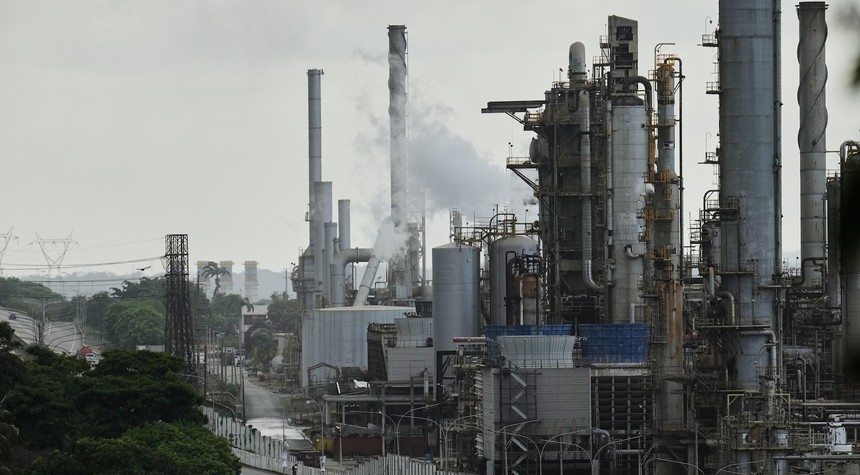
Energy sector stocks posted significant gains Monday following President Donald Trump’s announcement that the United States would assume control of Venezuela’s oil industry and deploy American companies to restore its production capacity after the capture of President Nicolás Maduro.
The market response reflects both optimism and caution as investors weigh the potential of Venezuela’s considerable oil reserves against the substantial challenges facing any restoration effort. Venezuela’s oil infrastructure has deteriorated significantly after years of mismanagement and international sanctions, presenting American companies with a complex undertaking should they choose to invest.
The immediate impact on crude oil prices appears limited. Global markets currently face an oversupply of oil, with benchmark U.S. crude prices down 20 percent compared to last year. A barrel of U.S. crude has not exceeded $70 since June and has remained well below the $80 mark since last summer.
Industry analysts remain divided on Venezuela’s production potential under American management. Some experts suggest the nation could double or triple its current output of approximately 1.1 million barrels per day, potentially returning to historic production levels within a relatively short timeframe. Others counsel patience, noting the extensive infrastructure damage and political complexities involved.
Neal Dingmann of William Blair offered a measured assessment of the situation. While acknowledging the Trump administration’s stated intention to deploy major U.S. oil companies with billions in investment capital, Dingmann expressed skepticism about the timeline. Political risks combined with current depressed oil prices may discourage companies from committing resources in the near term, he noted.
The restoration of Venezuelan oil production would require substantial capital investment and considerable time. Infrastructure improvements alone would demand millions of dollars, and any meaningful increase in production capacity would take years to achieve under even favorable conditions.
The broader context presents additional considerations. American energy companies would be entering a weakened global market at a time when domestic production remains robust and international demand faces uncertainty. The strategic value of Venezuelan oil reserves must be balanced against immediate economic realities and the substantial risks inherent in operating within a nation emerging from political upheaval.
Venezuela once stood as a major oil producer, but decades of nationalization, corruption, and economic mismanagement reduced its output dramatically. The country possesses some of the world’s largest proven oil reserves, making its potential restoration significant for global energy markets.
The success of this endeavor will depend on multiple factors beyond infrastructure investment. Political stability, regulatory frameworks, and the willingness of major energy companies to commit resources in an uncertain environment will all play crucial roles in determining whether Venezuela can reclaim its position in global energy markets.
For now, the energy sector responds to possibility rather than certainty, with stock prices reflecting investor hopes that American expertise and capital can reverse decades of decline in Venezuelan oil production.
Related: Billy Joel Makes Surprise Stage Appearance Months After Brain Disorder Diagnosis
