
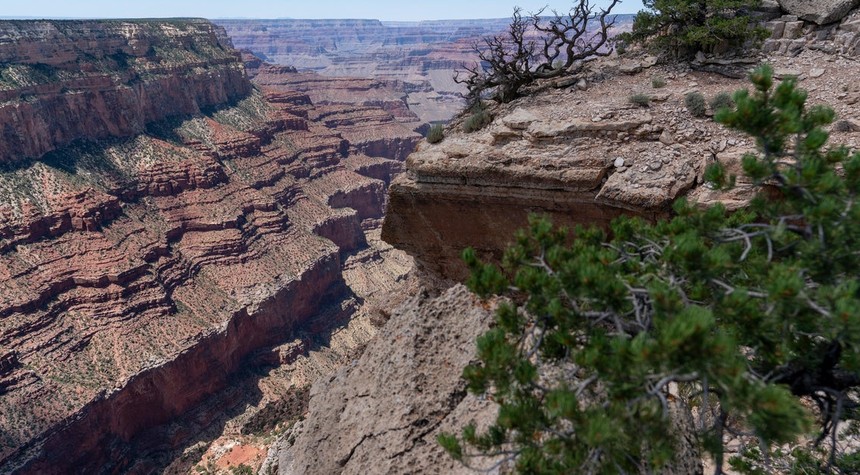
An eighteen-year-old male hiker died Wednesday afternoon after experiencing heat-related symptoms while hiking deep within the Grand Canyon, according to the National Park Service.
Park rangers received reports at approximately 1:40 p.m. local time of a young man suffering from heat-related illness along the Bright Angel Trail, one of the canyon’s most traveled routes. The hiker had descended past Havasupai Gardens, a rest area and campground located some 3,000 feet below the canyon’s rim.
Rangers immediately initiated a helicopter rescue operation. They located the teen approximately 30 feet below the trail in a remote section of the canyon. Despite attempts at life-saving measures, those efforts proved unsuccessful.
The National Park Service has not yet released the victim’s identity, pending notification of next of kin.
According to park officials, the young man had planned to complete a round-trip day hike from the South Rim to the Colorado River and back. The Bright Angel Trail follows this route and remains the most popular hiking trail descending into the canyon. However, park authorities explicitly recommend against attempting to hike to the river and return in a single day.
The park service’s official guidance is clear on this matter. Destinations below Havasupai Gardens are not recommended as day hikes due to the substantial distance involved, extreme temperature fluctuations, and the approximately 5,000-foot elevation change required in each direction. Even the trek to Havasupai Gardens and back spans nine miles and typically requires six to nine hours to complete. Park officials advise hikers to consult with a ranger before attempting even this shorter route as a day hike.
The Coconino County Medical Examiner’s Office has opened an investigation into the death.
Heat-related illnesses present serious dangers when individuals are exposed to extreme temperatures. Heat stroke, the most severe form, constitutes a medical emergency capable of causing permanent disability or death. During heat stroke, the body’s core temperature rises rapidly, potentially reaching 106 degrees Fahrenheit or higher within ten to fifteen minutes. The body loses its ability to regulate temperature and cool itself.
Warning signs of heat stroke include confusion, slurred speech, loss of consciousness, profuse sweating, and seizures. Medical attention must be sought immediately when these symptoms appear.
This tragic incident serves as a sobering reminder of the very real dangers that summer hiking presents in the American Southwest. The Grand Canyon, while magnificent, demands respect and careful preparation from those who venture into its depths. The combination of extreme heat, significant elevation changes, and the physical demands of ascending thousands of feet after a long descent creates conditions that have proven fatal to even young, presumably fit individuals.
Park officials continue to emphasize the importance of heeding posted warnings and ranger recommendations regarding hiking limitations during periods of extreme heat.
Related: U.S. Physician Treated for Ebola in Germany Returns to Health
