
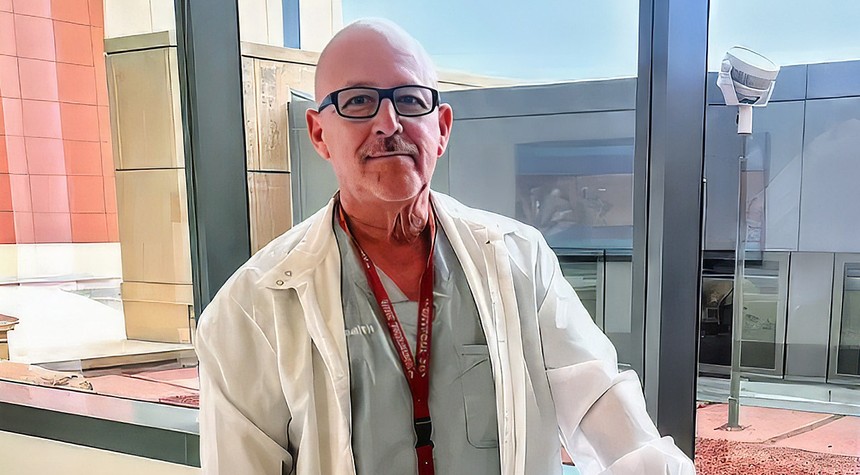
A California family is pursuing legal action against the city of Downey, filing a $40 million lawsuit after a 68-year-old lab technician was fatally stabbed by a homeless man with an extensive criminal record who had been released from custody mere hours before the attack.
Reinaldo Lefonts was charging his Tesla outside the Downey City Library last September when he was attacked and killed. His alleged assailant, Giovanni Navarro, had 28 prior convictions and had been arrested for trespassing in the same area less than 24 hours before the fatal encounter.
“He wasn’t just killed, he was murdered,” Michael Lefonts said of his father. “And when you hear something like that, the man you admire your whole life, it shatters you to the bone. There’s no rhyme or reason, and it hurts, and it still hurts.”
The tragedy was compounded by a second incident at the scene. After paramedics arrived to assist Lefonts, another homeless man, identified as Nicholas DeMarco, allegedly stole the ambulance and led police on a high-speed chase. The vehicle lacked the anti-theft systems typically installed on police and emergency vehicles. The pursuit ended when DeMarco crashed the ambulance. Lefonts was pronounced dead at the scene.
The family’s legal claim centers on allegations that city officials failed in their fundamental duty to protect residents despite years of documented problems in the area. Attorney Alex Galindo stated that the location has been a persistent trouble spot for the community.
“This was a colossal failure on the city of Downey’s behalf,” Galindo said. “They had known for quite some time that 10 years earlier, another officer was murdered in this same parking lot, one of its own police officers. They’ve had a long history of crime in this area.”
According to the attorney, the area surrounding the library has generated more than 670 police calls over the past four years. The lawsuit argues that the city bears liability for Lefonts’ death because officials helped create a dangerous environment through inadequate response to ongoing criminal activity.
The case raises broader questions about municipal responsibility when repeat offenders are released back into communities where they have established patterns of criminal behavior. The fact that Navarro was arrested in the immediate vicinity just hours before the fatal attack has become a central element of the family’s legal argument.
The death of a police officer in the same parking lot a decade earlier, combined with hundreds of documented incidents requiring law enforcement response, suggests a pattern of negligence that the family believes rises to the level of legal liability.
As communities across the nation grapple with questions of public safety, criminal justice reform, and the management of homeless populations with mental health and substance abuse issues, the Lefonts case presents a stark example of the human cost when systems fail. A family has lost a father and grandfather, and they are now seeking accountability from the officials they believe could have prevented this tragedy.
The lawsuit seeks $40 million in damages and, perhaps more importantly for the family, acknowledgment that their loved one’s death was preventable.
Related: American Military Deaths Mount as Iran War Claims Seven Lives
