
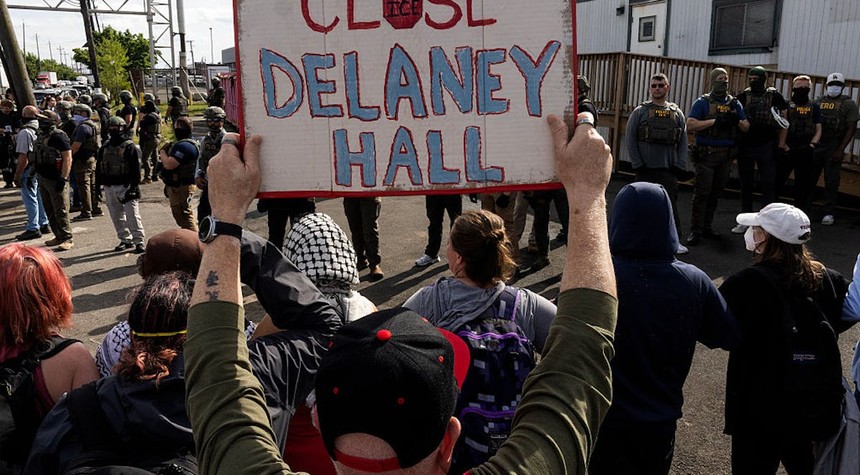
A case that sparked weeks of protests and a hunger strike at a New Jersey immigration detention facility has taken a significant turn as official police records contradict the public narrative that circulated widely through media coverage and social activism.
Martin Soto, a 31-year-old Peruvian national, entered ICE custody not while purchasing diapers as his wife publicly claimed, but following an arrest by local police for domestic assault. The police report details allegations that Soto caused bodily injury to a female victim by striking her face with both open and closed hands, resulting in scratches and cuts to her face and neck. The report further alleges that Soto placed his hand over the victim’s mouth to prevent her from calling for help.
These facts stand in stark contrast to the account provided by Gabriela Soto, who characterized her husband as a loving father and church member who had been abducted by immigration authorities. Her claims fueled protests outside Delaney Hall detention facility throughout May and June, with demonstrations at times turning violent.
The discrepancy between the official record and the public narrative raises serious questions about the information that shaped public opinion in this matter. A fundraising campaign established for Martin Soto has collected more than $67,000 based largely on the initial characterization of events.
Scott Mechkowski, who previously served as deputy director of the ICE New York field office and now works as a visiting fellow for deportation studies at the Oversight Project, provided context for the sequence of events. According to official records, Soto was first arrested by Kearny police, then transferred to Hudson County authorities before being taken into ICE custody at Delaney Hall.
The case highlights a troubling pattern in immigration enforcement debates. Claims designed for maximum emotional impact often circulate rapidly through media channels and social networks, while official documentation remains unexamined. In this instance, Delaney Hall underwent inspection and received clearance, yet facility officers faced public condemnation based on allegations that official records do not support.
Martin Soto crossed into the United States illegally through Arizona in January. His wife claimed during the protests that detention conditions were inhumane and expressed concern that stress from the situation would cause her to miscarry.
The identity of the alleged assault victim could not be immediately confirmed through available records.
This case serves as a reminder of the importance of verifying claims before they shape public policy debates and influence public opinion. Immigration enforcement remains a contentious issue deserving serious examination, but that examination must rest on accurate information rather than narratives constructed for emotional appeal.
The facts of individual cases matter. They matter to the victims of alleged crimes, to law enforcement officers performing their duties, and to the public trying to understand complex policy questions. When those facts are obscured or misrepresented, everyone loses.
Related: Landmark Digital Assets Bill Faces Partisan Divide Over Presidential Conflict of Interest Rules
