
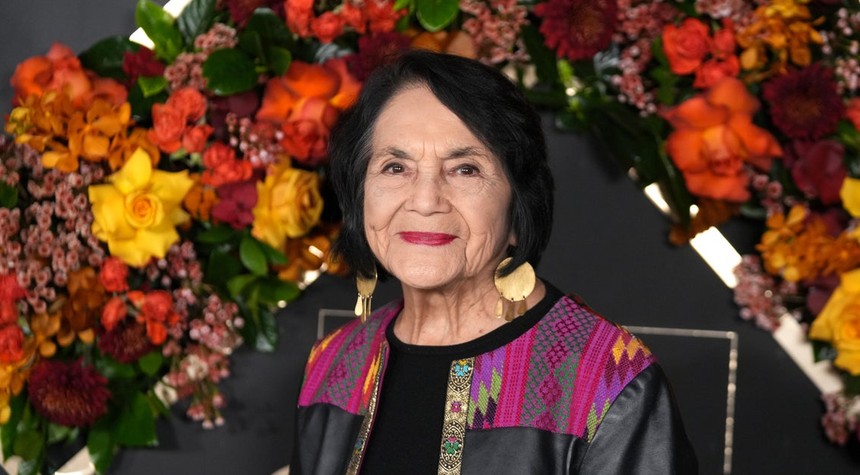
Dolores Huerta, the labor activist who alongside Cesar Chavez built one of America’s most significant farm worker movements, died Wednesday at her home in Bakersfield, California. She was 96 years old.
Family spokesperson Erik Olvera confirmed that Huerta died of cancer, surrounded by her loved ones. Through her California-based foundation, the family released a statement requesting privacy during this difficult period, acknowledging that many around the world would share in their mourning.
Huerta co-founded what would become the United Farm Workers, an organization that fundamentally altered the landscape of agricultural labor in America. Her decades of activism focused on securing basic rights and dignified working conditions for some of the nation’s most vulnerable workers.
California Governor Gavin Newsom ordered flags flown at half-staff in her honor, describing Huerta as representing “the best of us.” The governor credited her resolute spirit and commitment to justice as instrumental in shaping both California and the nation.
Huerta’s influence extended far beyond the fields of California. She remained active well into her nineties, maintaining a rigorous schedule of protests, speeches, and advocacy work. Her foundation promoted causes ranging from workers’ rights to issues affecting women and other communities.
Los Angeles Mayor Karen Bass characterized Huerta’s legacy as demonstrating what ordinary people can accomplish through organization and determination. Bass noted that Huerta never ceased her civil rights work, fighting daily even as she entered her tenth decade.
Former House Speaker Nancy Pelosi remembered Huerta as a dear friend whose courage and determination inspired countless Americans. Pelosi specifically referenced Huerta’s famous rallying cry, “Sí se puede,” which translates to “Yes, it can be done.”
The origin of that slogan came during a campaign in Arizona, where state law had criminalized farm worker strikes. When local Latino leaders told Huerta that change was impossible in Arizona, saying “no se puede,” she spontaneously responded with the affirmative that would become a national rallying cry.
Huerta’s contributions earned her numerous honors throughout her life, including the Presidential Medal of Freedom. Her work helped establish fundamental protections for agricultural workers and demonstrated the power of grassroots organizing in achieving social change.
What distinguished Huerta was not merely her activism but her persistence. She remained engaged in public life long after many of her contemporaries had retired, continuing to advocate for workers, women, and marginalized communities across America.
Her passing marks the end of an era in American labor history, though the organizations and movements she helped build continue their work today.
Related: Tech Giants Face Trial Over Claims Their Platforms Deliberately Addicted Minors