
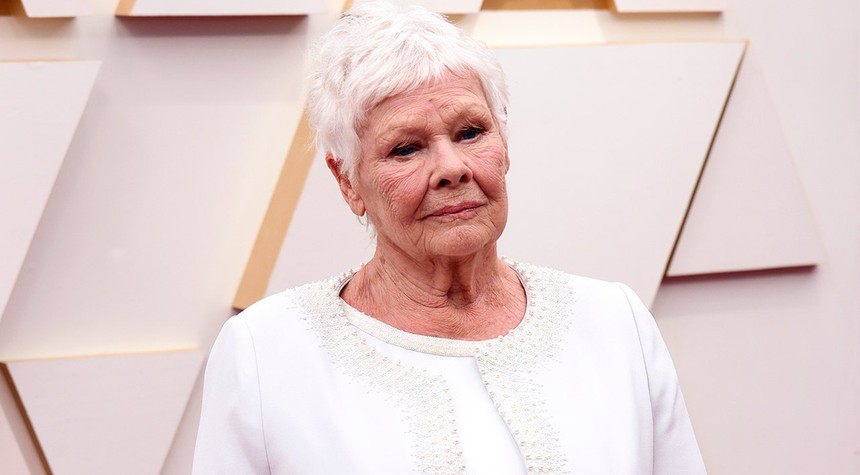
Dame Judi Dench, the 91-year-old English actress whose career has spanned seven decades across stage and screen, has issued a sharp rebuke of the expanding use of trigger warnings in theatrical productions and films, calling the practice “mollycoddling” that has gone too far.
In excerpts from her forthcoming memoir, “Is It Too Late to Make a Run for It?” published this week, Dench articulated concerns that content warnings have expanded well beyond their original purpose of alerting audiences to age-appropriate material, strobe lighting effects, and loud sound effects such as gunshots.
“I think they have gone too far,” Dench stated plainly. “It’s mollycoddling. If you’re that sensitive, don’t go to the theater.”
The actress, known for her commanding performances in both classical theater and modern cinema, drew a clear line between reasonable safety warnings and what she views as excessive caution that undermines the theatrical experience itself.
“By all means, keep the warnings about strobe lighting and gunshots, and obviously there should be age limits for children, but that’s about it. Otherwise, where will it end?” Dench asked, raising questions about the logical conclusion of such policies.
To illustrate her point, Dench referenced Shakespeare’s “Titus Andronicus,” one of the playwright’s most violent works. She suggested that comprehensive trigger warnings for such a production would be absurdly lengthy, potentially exceeding the runtime of the play itself. The actress further questioned whether excessive warnings diminish audience engagement by removing the element of surprise that makes dramatic storytelling effective.
“Do you tell them that the butler did it in an Agatha Christie play so as not to shock them?” Dench posed, highlighting what she sees as the fundamental contradiction in over-warning audiences about content they have chosen to experience.
At the heart of Dench’s criticism lies a philosophical question about the purpose of dramatic art. “Besides, in the safety of a theater or cinema, I want to be triggered, excited, stimulated, provoked and disturbed, to be taken out of my comfort zone. Isn’t that what makes theater and films so thrilling?” she argued.
The actress also pointed to the subjective nature of what might disturb different individuals, noting that attempting to warn for every possible sensitivity becomes an impossible task. “And who knows what might trigger people? Balloons, clowns, buttons… I have a friend who doesn’t like bananas. She feels physically sick every time she sees one. Should supermarkets put up warning signs in the fruit and veg aisle? It drives me wild.”
This is not the first time Dench has addressed this issue publicly. In a 2024 interview, she expressed measured sympathy for some arguments supporting content advisories while maintaining her fundamental position that those with extreme sensitivities should exercise personal discretion about their entertainment choices rather than expecting institutions to provide comprehensive warnings.
The debate over trigger warnings has intensified in recent years, particularly within educational institutions where some universities have placed extensive content warnings on classical literature, including Shakespeare’s works. The practice has drawn criticism from those who argue it represents an overcorrection that infantilizes audiences and undermines the transformative power of challenging artistic content.
Dench’s comments reflect a broader cultural conversation about the balance between protecting sensitive individuals and preserving the essential nature of dramatic art, which has historically sought to challenge, provoke, and transform its audiences through confrontation with difficult subject matter.
Related: DOJ Seizes 187 Devices in North Korean Identity Theft Investigation
