
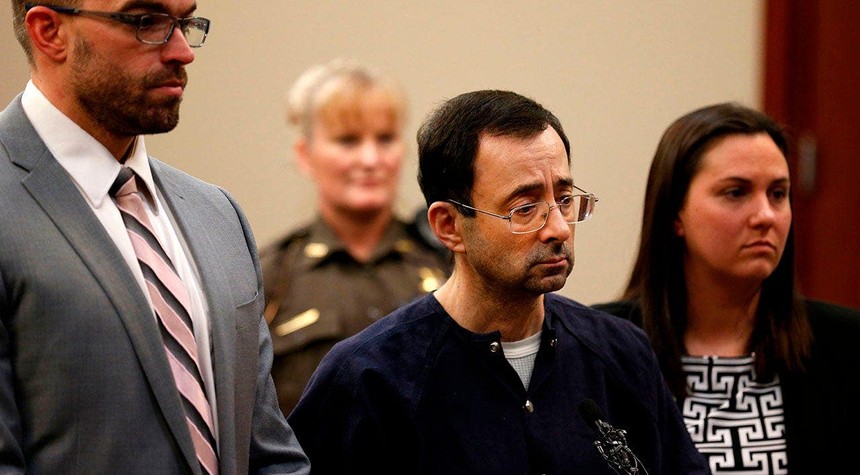
Larry Nassar, the former sports physician serving decades in prison for sexually abusing hundreds of young female athletes, has been removed from Michigan’s Sex Offender Registry following a state Supreme Court decision regarding registry laws.
The Eaton County Prosecutor’s Office confirmed Thursday that Nassar is among more than 20,000 individuals whose names were purged from the Michigan State Police database. This development stems from a September 9 Michigan Supreme Court ruling that determined 2021 amendments to the state’s Sex Offender Registration Act cannot be applied retroactively to crimes committed before July 1, 2011.
The legal technicality that resulted in Nassar’s removal centers on when his crimes occurred, not when he was convicted. While Nassar was not publicly exposed, arrested, or convicted until years later, his criminal conduct technically took place before the 2011 cutoff date. Consequently, state law no longer requires his listing on the public registry.
Nassar served as a team physician for USA Gymnastics until 2014 and Michigan State University until 2016. The scope of his abuse remained hidden until September 2016, when Rachael Denhollander publicly accused him, triggering an investigation that would become a national scandal.
During his January 2018 sentencing hearing, dozens of victims testified about the abuse they suffered, including Olympic champions Aly Raisman and Jordyn Wieber. The testimonies revealed a pattern of abuse spanning decades, affecting more than 150 girls and young women who had been under his medical care.
Nassar is currently serving a 60-year federal sentence for possession of child pornography, in addition to state sentences ranging from 40 to 125 years for criminal sexual assault convictions in Eaton County.
The Eaton County Prosecutor’s Office issued sharp criticism of the removal. Prosecutor Doug Lloyd noted that while Nassar’s convictions came after the legal deadline, the underlying criminal conduct created this loophole. The prosecutor’s office argued that the Supreme Court could have interpreted the law differently to ensure certain offenders remained on the public registry.
The office further stated that questions regarding the registry’s effectiveness should be resolved by the legislature through the lawmaking process, rather than determined through judicial interpretation.
This case raises significant questions about how retroactive application of criminal registry laws affects public safety and victim rights. The removal of Nassar’s name, despite his convictions and lengthy incarceration, demonstrates how legal technicalities can produce outcomes that seem to contradict the intent of public protection laws.
The Michigan Supreme Court’s ruling affects thousands of registered offenders whose crimes predated the 2011 threshold, creating a substantial reduction in the state’s public sex offender database. Whether the state legislature will act to address this outcome remains to be seen.
Related: Justice Department Receives Referral Alleging Federal Prosecutor Misled FBI Agents
