
In a rare display of bipartisan cooperation, members of the House of Representatives have united to address a growing concern facing American houses of worship: disruptive protests that prevent citizens from exercising their constitutional right to religious freedom.
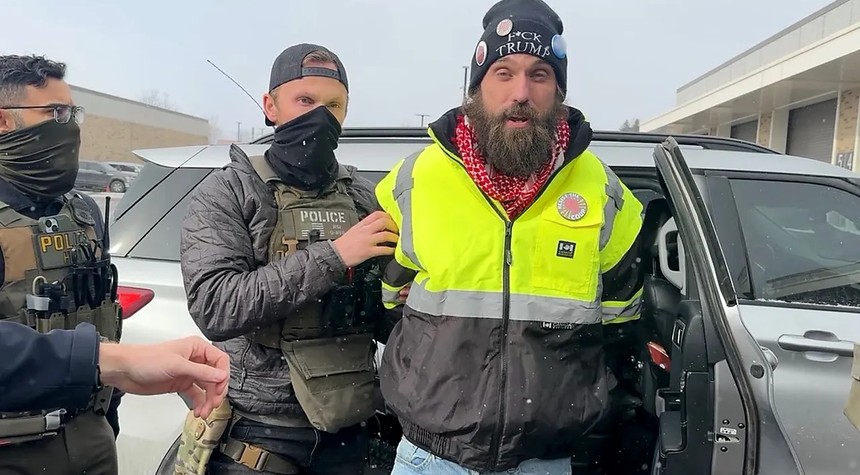
Representative Brad Knott of North Carolina and Representative Tom Suozzi of New York are introducing legislation that would make it a federal crime to knowingly disrupt or impede individuals from attending religious services. The proposed bill comes in response to several high-profile incidents, including a January protest at Cities Church in St. Paul, Minnesota, where anti-ICE demonstrators stormed the building during services.
The legislation establishes clear parameters for what constitutes unlawful disruption. Under the proposed law, demonstrations would be prohibited within 100 feet of any pedestrian or vehicular entrance to a house of worship during a protected window: beginning one hour before a scheduled service and ending one hour after its conclusion.
Penalties for violations would escalate with each offense. A first violation would carry a civil fine of $2,500, a second offense would increase to $5,000, and a third violation would result in a $10,000 penalty.
The bill’s authors have taken care to preserve First Amendment protections. The legislation specifically defines disruptions based on objective criteria such as volume, duration, and impact on attendees, rather than the content of speech itself. Additionally, the bill includes exceptions for demonstrations conducted under federal, state, or local government-issued permits.
Representative Knott emphasized the fundamental nature of religious liberty in American society. He noted that many Americans currently face harassment, assault, or intimidation when attempting to worship, a situation he described as incompatible with the nation’s founding principles. No American, he stated, should be forced to choose between worshiping in fear and not worshiping at all.
Representative Suozzi echoed these concerns while acknowledging the importance of peaceful protest. He made clear that while Americans retain the right to demonstrate, attendees of religious services should not face harassment, threats, or intimidation for practicing their faith.
The St. Paul incident that helped prompt this legislation has generated particular controversy. The city attorney’s office declined to prosecute the protesters who entered Cities Church, characterizing their actions as a peaceful protest despite the disruption to congregants.
This legislative effort reflects a broader concern about the sanctity of religious spaces in American civic life. Houses of worship have historically been afforded special protections, recognizing their unique role in communities and the vulnerability of citizens engaged in religious practice.
The bill now faces the legislative process in the House, where its bipartisan sponsorship may improve its prospects for passage. If enacted, it would provide federal law enforcement with new tools to protect religious gatherings while maintaining the delicate balance between free speech rights and religious liberty.
Related: Military GPS Jamming Exercise Preceded Fatal Air Ambulance Crash in New Mexico
