
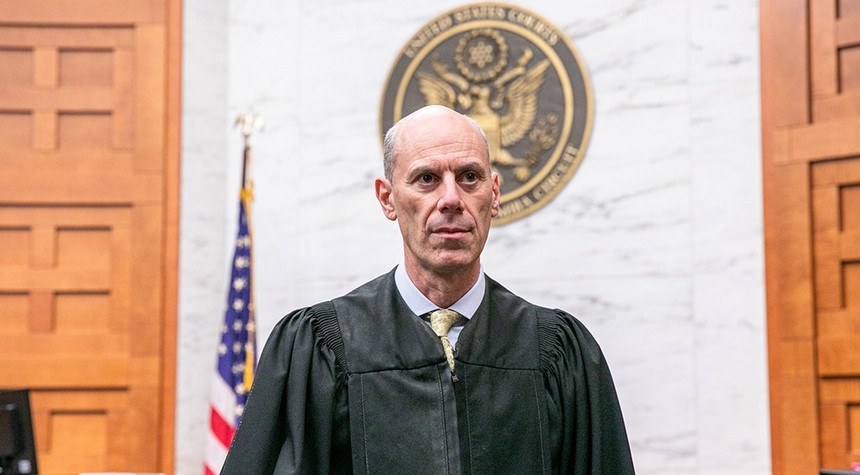
A senior federal court administrator has confirmed that the chief judge in Washington routinely approved gag orders for the FBI’s Arctic Frost investigation without being informed that the subpoenas targeted members of Congress.
Robert Conrad Jr., director of the Administrative Office for the United States Courts, provided this explanation to Senate Judiciary Committee Chairman Chuck Grassley this week. The revelation concerns Judge James Boasberg’s authorization of non-disclosure orders that prevented phone companies from notifying Republican lawmakers that their records had been subpoenaed by former special counsel Jack Smith in 2023.
The Arctic Frost investigation ultimately resulted in federal election charges against President Donald Trump. The probe’s methods, particularly the secretive acquisition of congressional phone records, have drawn sharp criticism from Republican lawmakers who say proper judicial oversight was circumvented.
In his letter to Senator Grassley, Conrad explained that the Department of Justice’s requests for gag orders typically did not include the related subpoenas. Instead, these applications identified subject accounts only through technical signifiers such as phone numbers, without revealing the identity of the account holders.
“As a result, non-disclosure order applications would not reveal whether a particular phone number belonged to a member of Congress,” Conrad wrote. This practice meant Judge Boasberg would have had no way of knowing he was authorizing the concealment of subpoenas directed at sitting members of Congress.
Conrad acknowledged he could not address the specific subpoenas and gag orders in question, partly because some materials remain under seal. However, he offered to help lawmakers understand the relevant practices that were in place during the Arctic Frost investigation.
Senator Grassley, who has led the congressional inquiry alongside Senator Ron Johnson of Wisconsin and Representative Jim Jordan of Ohio, placed responsibility squarely on the Biden administration’s Department of Justice. The Iowa Republican noted that the DOJ’s Public Integrity Section had authorized Smith’s team to subpoena lawmakers’ phone records while simultaneously warning prosecutors about potential constitutional concerns under the speech or debate clause, which provides Congress members with certain protections from prosecution.
“Smith went ahead with the congressional subpoenas anyway, and it appears he and his team did not apprise the court of member involvement,” Grassley stated. “Smith’s apparent lack of candor is deeply troubling, and he needs to answer for his conduct.”
The speech or debate clause, found in Article One of the Constitution, protects members of Congress from being questioned in other venues about their legislative activities. This protection exists to preserve the separation of powers and prevent the executive branch from intimidating or harassing the legislative branch.
The Department of Justice has since revised its policies following an inspector general report issued in 2024. Under the new guidelines, prosecutors are now required to notify the court when subpoenas target members of Congress.
The controversy raises fundamental questions about the balance between legitimate law enforcement activities and the constitutional protections afforded to the legislative branch. It also highlights the potential for abuse when standard procedures allow prosecutors to obtain judicial authorization without full disclosure of relevant facts.
As this matter continues to unfold, congressional investigators are seeking additional answers about who knew what and when regarding the targeting of lawmakers’ records, and whether proper protocols were deliberately bypassed or simply inadequate to address such sensitive circumstances.
Related: Dave Coulier Diagnosed With Second Cancer Following Lymphoma Recovery
