
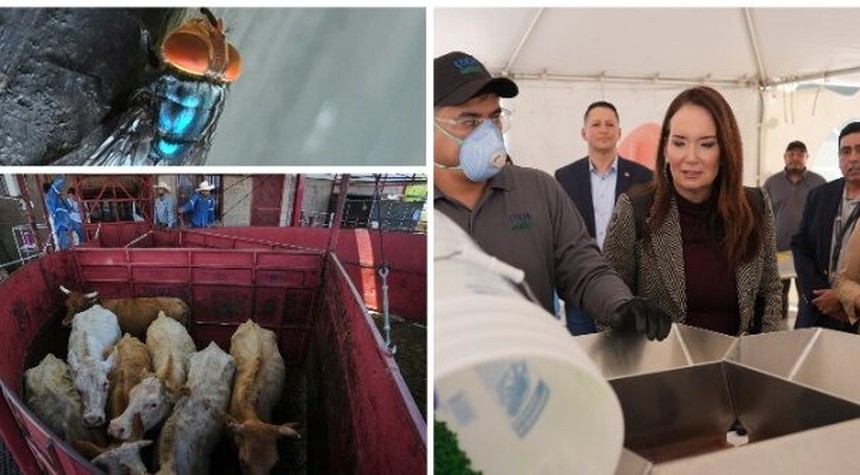
The United States Department of Agriculture confirmed Friday a second case of New World screwworm infestation in Texas, this time in a calf located in Zavala County, approximately 5.6 miles from an earlier discovery this week. Both cases have been found on ranches near the Texas-Mexico border, marking the first confirmed infestations since warnings were issued in February.
The flesh-eating parasite, which had been eradicated from the United States decades ago, now poses what Texas Governor Greg Abbott has termed an “imminent threat” to the state’s livestock industry. In response, Abbott issued a disaster declaration Friday and mobilized state resources to combat the outbreak.
“I authorize the use of all available resources of state government to respond to this disaster and reassign resources from across the state as needed,” Governor Abbott stated. “I am making all state personnel available to accelerate the movement of sterile flies into Texas and the construction of the new sterile screwworm production facility in Edinburg. We have eradicated this pest before, and we will do it again.”
The international implications became immediately apparent when Canada’s food inspection agency announced a temporary ban on livestock imports from Texas. The prohibition applies to all cattle and horses that have been located in Texas within the past 21 days. Canadian officials acknowledged that while a screwworm outbreak in Canada remains unlikely due to the cold climate, the precautionary measure demonstrates the seriousness with which neighboring nations are treating this development.
Texas Agriculture Commissioner Sid Miller had warned of this threat as early as February, when screwworm activity was detected 187 miles south of the Rio Grande in Mexico. At that time, Miller expressed concern that the parasite remained active during winter months when it should have been dormant.
“This will impact everybody in some form,” Commissioner Miller said in February. “Livestock, wildlife, pets, even people. Ranchers, deer hunters, pet owners need to prepare.”
Miller’s prediction has proven prescient. With the arrival of warmer temperatures in June, the screwworm has crossed into Texas territory. The commissioner has been critical of what he characterizes as the USDA’s passive approach to the crisis, which relies primarily on releasing sterile flies in Mexico to interrupt the parasite’s reproductive cycle.
“For months, the screwworm has advanced rapidly through Mexico in spite of the USDA’s existing game plan,” Miller stated following this week’s outbreak. The commissioner has advocated for a more aggressive program utilizing bait to kill the flies that spread the screwworm larvae, rather than depending solely on the sterile fly method.
The New World screwworm represents a significant threat to the livestock industry. The parasite’s larvae feed on the living tissue of warm-blooded animals, and if left untreated, infestations can prove fatal. The economic implications for Texas ranchers and the broader agricultural sector could be substantial if the outbreak is not contained swiftly.
The construction of a new sterile screwworm production facility in Edinburg, which Governor Abbott has prioritized, represents the state’s commitment to utilizing proven eradication methods while supplementing federal efforts. The question now facing agricultural officials is whether these measures can be implemented rapidly enough to prevent further spread as summer temperatures create increasingly favorable conditions for the parasite.
Related: Bellingham School Board Member Under Fire for Children’s Sexuality Workshop
