
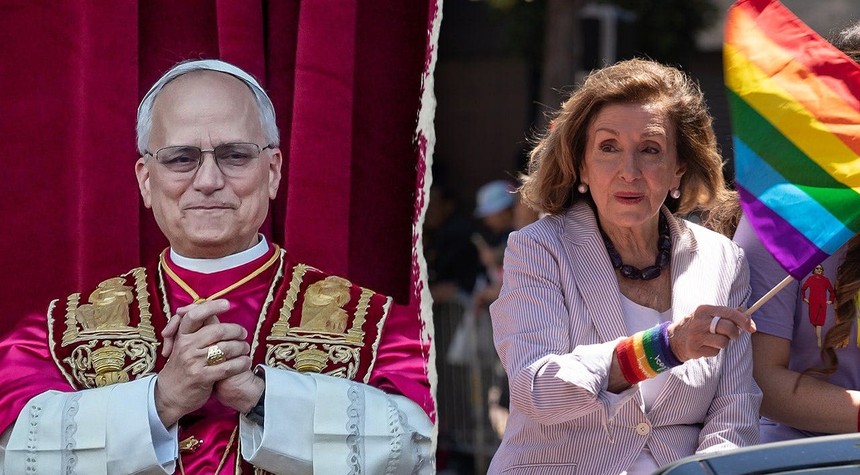
The Vatican announced Saturday that Pope Leo XIV has appointed Archbishop Salvatore Cordileone of San Francisco to serve on the Supreme Tribunal of the Apostolic Signatura, the Catholic Church’s highest judicial body after the pontiff himself.
Archbishop Cordileone gained international attention in 2022 when he prohibited then-House Speaker Nancy Pelosi from receiving Holy Communion within his archdiocese due to her public support for abortion rights. That decision sparked considerable debate within American Catholic circles about the intersection of faith and politics.
The appointment allows Archbishop Cordileone to maintain his leadership of the San Francisco Archdiocese while simultaneously serving a five-year term on the Vatican tribunal. He was among seven clergy members named to the court, which oversees the administration of justice throughout the global Catholic Church.
The Supreme Tribunal of the Apostolic Signatura functions as the Church’s supreme court, handling appeals and disputes involving ecclesiastical law. The body consists of cardinals, bishops, and priests appointed by the pope for five-year terms, under the leadership of a Cardinal Prefect.
This appointment comes at a time when the American Catholic Church continues to grapple with questions about how bishops should respond to Catholic politicians whose policy positions conflict with Church teaching. Archbishop Cordileone’s decision regarding Speaker Pelosi represented one of the most prominent applications of this principle in recent memory.
Meanwhile, in New York, Archbishop Ronald Hicks has issued strong criticism of the state’s newly enacted medical aid in dying legislation. The archbishop characterized assisted suicide as a dangerous slippery slope and an assault on the fundamental sanctity of human life.
In his statement, Archbishop Hicks emphasized that life represents a sacred gift deserving of protection and reverence, regardless of circumstances. He pointed to the examples set by recent pontiffs, including Pope Francis and Pope John Paul II, who embraced suffering during their final years rather than seeking to hasten death.
The New York law represents the latest expansion of assisted suicide legislation in the United States, joining several other states that have enacted similar measures in recent years. Catholic bishops across the country have consistently opposed such legislation, viewing it as fundamentally incompatible with the Church’s teaching on the dignity of human life from conception to natural death.
These developments underscore the ongoing tension between Catholic doctrine and evolving secular legal frameworks on life issues. As state legislatures continue to consider such measures, the Church hierarchy has signaled its intention to maintain vocal opposition to policies it views as undermining the value of human existence.
The appointments and statements from Church leadership reflect a broader effort to reinforce traditional Catholic teaching on life issues during a period of significant cultural and legal change in American society.
Related: Ten Women Come Forward with Sexual Assault Claims Against Jared Leto
