
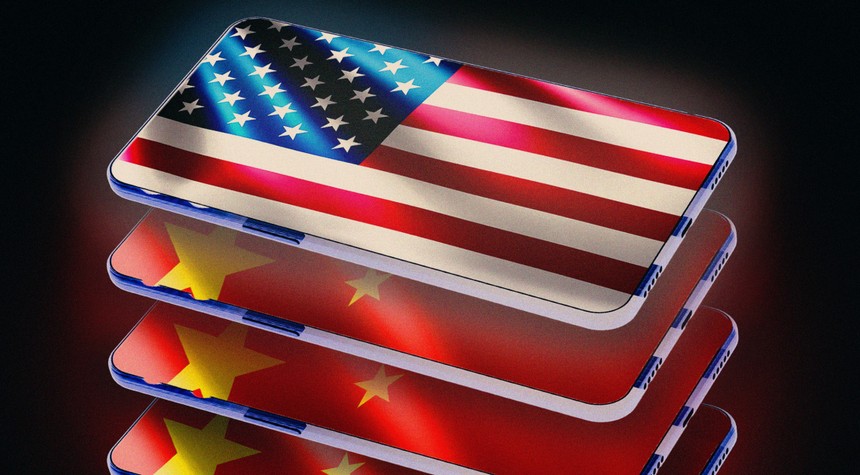
The competitive landscape of artificial intelligence development has shifted in ways that may concern those tracking America’s technological leadership. A growing number of American AI companies are turning to Chinese-made artificial intelligence models, raising fundamental questions about the strategic direction of the domestic industry.
Misha Laskin, a theoretical physicist and machine learning engineer who contributed to the development of some of Google’s most advanced AI systems, observed this trend with mounting concern earlier this year. The Chinese models, he noted, are not merely adequate alternatives. They are approaching the cutting edge of AI capability at a remarkable pace.
“These models were not that far behind the frontier. In fact, they were surprisingly close to the frontier,” Laskin stated. He founded Reflection AI, a startup recently valued at eight billion dollars, specifically to provide an open-source American alternative to these increasingly capable Chinese systems that have gained substantial traction in Silicon Valley.
The shift represents more than a minor market adjustment. Over the past year, numerous American AI startups have adopted open Chinese AI models that increasingly rival, and in some cases replace, expensive American systems as the foundation for their products.
Interviews with more than fifteen AI startup founders, machine learning engineers, industry experts, and investors reveal a consistent pattern. While American companies such as OpenAI and Anthropic continue to advance the frontier of AI capabilities, many Chinese systems offer compelling advantages. They are cheaper to access, more customizable, and have become sufficiently capable for a wide range of applications.
The implications for American industry are significant. Investors have committed tens of billions of dollars to leading American artificial intelligence companies, betting that they will dominate the global AI market. The increasing adoption of free Chinese models by American firms challenges this assumption and raises questions about whether the American pursuit of closed, proprietary models may be strategically misguided.
Michael Fine, head of machine learning at Exa, an AI-focused search company valued at seven hundred million dollars and backed by prominent Silicon Valley investors including Lightspeed Venture Partners and Nvidia, provided concrete examples of this trend. Running Chinese models on the company’s own hardware has proven significantly faster and less expensive than using larger models from OpenAI or Google in many applications.
“What often happens is we will get a feature working with a closed model and realize it is too expensive or too slow, and we ask, ‘What levers do we have to make this faster and cheaper?'” Fine explained. The answer, increasingly, involves replacing the closed model with an equivalent open model and running it on proprietary infrastructure.
Chinese models such as DeepSeek’s R1 and Alibaba’s Qwen are available at no cost and are considered open-source or open-weight because anyone can download, copy, modify, and operate them. This stands in contrast to leading American models, which remain proprietary and accessible only through paid services.
The question facing American policymakers and industry leaders is whether this represents a temporary market phenomenon or a more fundamental shift in the competitive dynamics of artificial intelligence development. The answer will likely shape the trajectory of American technological leadership for years to come.
Related: Afghan National Arrested in Texas After Posting Bomb Threat Video on Social Media
