
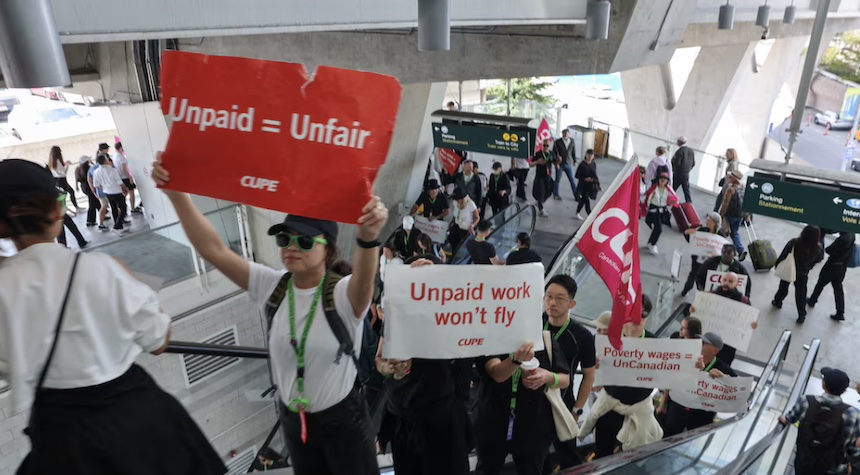
Over the past weekend, Air Canada has been forced to cancel hundreds of flights. This drastic action occurred after 10,000 of the airline’s flight attendants refused to comply with federal return-to-work orders. These orders came in the midst of an ongoing strike over wage disputes.
The Canadian Industrial Relations Board, in a statement on Monday morning, ruled the strike by Air Canada’s flight attendants as unlawful. The board instructed union leaders to direct the flight attendants to get back to work, according to reports from Air Canada. The Air Canada Component of the Canadian Union of Public Employees, known as CUPE, was given until noon ET Monday to issue a public notice instructing its members to end all strike-related activities and resume their work.
At the heart of the matter are salary negotiations between Air Canada and the CUPE flight attendants union. The union alleges that the carriers’ wages fall short of inflation, market value, and the federal minimum wage. The union’s demands also include compensation for groundwork, labor performed before takeoff and after landing, such as boarding and deplaning.

Air Canada proposed a 17.2% wage increase over a period of four years. However, the union contends that even with this increase, flight attendant earnings would be less than those of their contemporaries in other Canadian airlines.
The work stoppage forced Air Canada to cancel 738 flights on Sunday, with almost 400 more cancellations on Monday. Despite the Canadian Industrial Relations Board ordering flight attendants to return to work by 2 p.m. ET on Sunday, the union resisted, further delaying the resumption of flights.
In the wake of these labor disruptions and the grounding of the fleet, Air Canada announced Monday morning that it will suspend its third-quarter and year-end operating results and profit forecasts. The carrier plans to continue issuing travel updates as they become available.
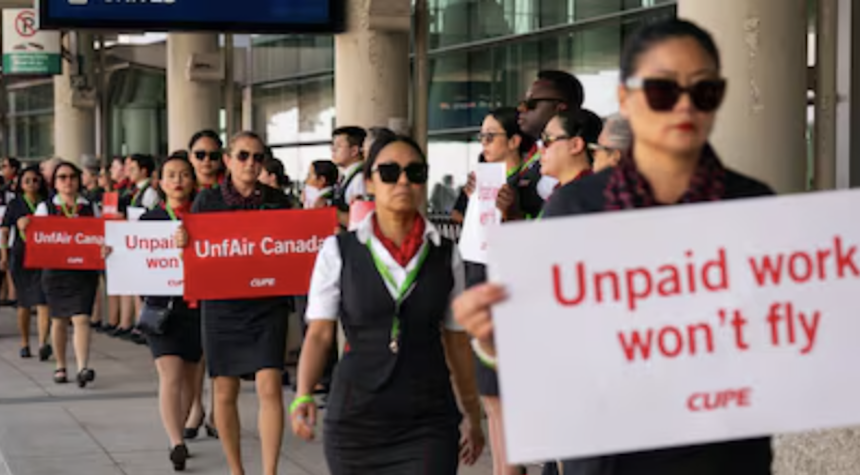
The shutdown, according to Air Canada estimates, has impacted around 130,000 travelers per day and left some passengers stranded. This raises important questions about the economic implications of this standoff, particularly at a time when Canadian businesses and families are already grappling with the economic fallout from President Trump’s tariffs.
This is a critical issue affecting one of Canada’s major airlines and its thousands of passengers. It’s a developing story with vast implications, a reminder of the importance of staying informed in a world that is, as ever, in flux.