
The Supreme Court faces a decision that could fundamentally alter the balance of power between Congress and the executive branch, arriving at a moment when Democrats prepare to launch investigations into President Trump’s second term.
At the center of this constitutional question stands Peter Navarro, a former Trump adviser who spent four months in federal prison for defying a congressional subpoena. His appeal asks the justices to establish that prosecutors must prove a witness knew their refusal was unlawful before criminal contempt charges can proceed. The implications extend far beyond one man’s conviction.
Navarro’s legal team argues that officials should be permitted to claim they genuinely believed executive privilege protected them from congressional demands, even if courts later determine that belief was mistaken. Under current precedent established by the District of Columbia Circuit Court of Appeals, a deliberate refusal to comply with a subpoena satisfies the criminal statute’s requirement of willful noncompliance, regardless of the defendant’s stated reasoning.
The case traces back to February 2022, when the House select committee investigating the events of January 6 subpoenaed Navarro for documents and testimony regarding efforts to challenge the 2020 election results. Navarro declined to cooperate, asserting that former President Trump had invoked executive privilege. The Democrat-controlled House held him in contempt, the Biden Justice Department secured an indictment, and a jury convicted him in 2023.
The lower courts found multiple deficiencies in Navarro’s defense beyond the question of criminal intent. The appellate court determined that neither Trump nor any authorized representative had properly invoked executive privilege in response to the subpoena. Additionally, judges concluded that much of what Navarro withheld could not have been privileged under any circumstances.
Nevertheless, a coalition of Republican attorneys general from twelve states, led by Oklahoma, has urged the Supreme Court to hear the case. Conservative legal organizations including the Oversight Project and the Article III Project have filed supporting briefs, warning that current standards transform routine congressional subpoenas into criminal traps that discourage the traditional negotiations used to resolve disputes between the legislative and executive branches.
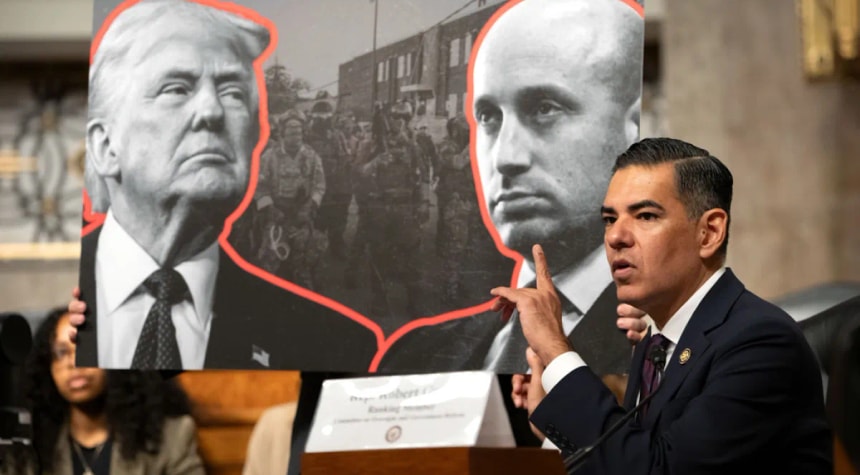
The stakes have grown considerably as Representative Robert Garcia of California prepares to chair the House Oversight and Government Reform Committee. Garcia directed pointed remarks at Stephen Miller following his appointment as White House Chief of Staff, stating that Miller should retain legal counsel and promising scrutiny of immigration policies.
A parallel case adds complexity to the legal landscape. Steve Bannon, another former Trump adviser, served four months in prison after his 2022 conviction for refusing to cooperate with the same January 6 committee. In a remarkable reversal, Trump’s Justice Department filed a motion last Thursday asking a federal judge to vacate Bannon’s conviction and dismiss his indictment. Prosecutors cited concerns about the exclusion of defenses based on claims of executive privilege, echoing arguments made by Navarro’s legal team.
The Supreme Court had previously vacated the appellate judgment in Bannon’s case, directing lower courts to consider the dismissal request. However, that action left unresolved the central question of what Congress meant when it criminalized willful default on congressional subpoenas. Navarro’s petition may provide the vehicle for the justices to address that question directly.
Former Interior Secretary David Bernhardt and the conservative organization Citizens United have submitted additional briefs addressing how Congress has historically handled privilege disputes and the importance of protecting candid presidential advice.
The legal battle unfolds as both parties prepare for confrontation. Democrats are assembling investigative teams for their return to majority status in the House, while Trump administration officials seek clearer protections against criminal prosecution for resisting congressional oversight. The Supreme Court’s decision, when it comes, will help define the boundaries of that conflict for years to come.
And that is the way it is.
Related: Massachusetts Cardiologist Found Dead After Disappearing During Weekend Bike Ride
