
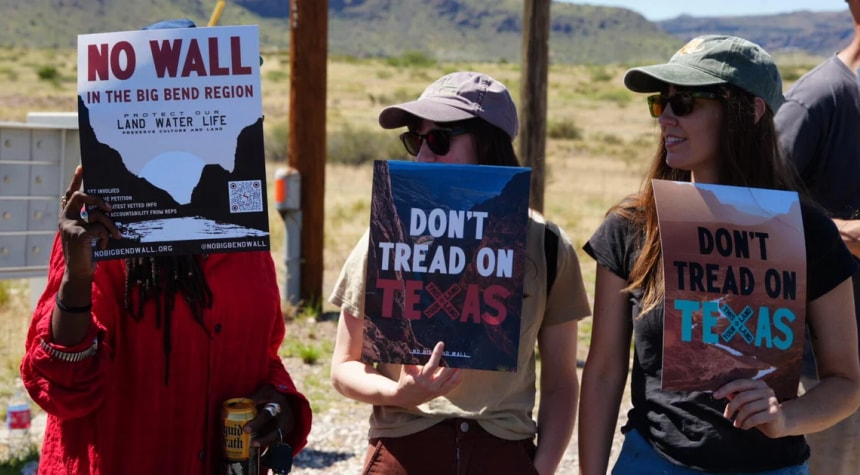
The Supreme Court has ruled to allow the Trump administration to resume construction of border wall infrastructure in a remote section of West Texas while legal challenges to the project continue through the courts.
In an unsigned decision issued Monday, the nation’s highest court agreed to lift a district court injunction that had temporarily halted construction of the wall and related infrastructure in the Big Bend sector. This area encompasses more than 500 miles of the southern border and includes Big Bend National Park. Justice Ketanji Brown Jackson indicated she would have denied the Justice Department’s request for emergency relief.
The Supreme Court’s five-page decision stated that the lower court’s order delays construction of border barriers and roads in the Big Bend region and impedes the government from advancing its compelling interests in border security and integrity. The court noted that while challengers claim construction will diminish their ability to use and enjoy the area, Congress enacted immigration law permitting the Secretary of Homeland Security to waive requirements of environmental protection and other conservation laws. This reflects a clear preference for expeditious border construction over the harms asserted by the plaintiffs.
The Center for Biological Diversity, among the plaintiffs opposing the project, issued a sharp rebuke of the decision. The group’s national public lands advocate stated that the ruling clears the way for contractors to bulldoze pristine desert and dynamite canyon walls before courts have determined whether such destruction is legal.
The Trump administration had petitioned the Supreme Court last month to intervene in the legal dispute, arguing that the halt ordered by U.S. District Judge Kathleen Cardone frustrated its ability to combat illegal border crossings in the area. Solicitor General D. John Sauer warned that stopping construction would have serious consequences, including disruption of the government’s ability to secure a quarter of the southern border against cartel incursions, drug trafficking, and illegal entry.
The plaintiffs, including an environmental nonprofit, a professional riverboat guide, and a religious organization, argued that allowing construction to proceed would permanently alter an irreplaceable landscape. This includes Big Bend National Park, Big Bend Ranch State Park, and nearly 200 miles of the Rio Grande Wild and Scenic River corridor. They contended that once habitat is destroyed and wilderness landscapes fragmented, no final judgment can restore the status quo.
President Trump has made the border wall a centerpiece of his immigration policy for more than a decade, promising a 30-foot barrier along the U.S.-Mexico border. To accelerate construction in Texas, the secretary of Homeland Security issued three waivers for project areas in the Big Bend region beginning in February. These waivers invoke a 1996 federal immigration law granting the secretary authority to waive legal requirements deemed necessary to ensure expeditious construction of barriers and roads near the southern border.
The administration’s plans have drawn criticism from both Republican and Democratic lawmakers, cattle ranchers, and local law enforcement in Texas. Customs and Border Protection Commissioner Rodney Scott has stated that the proposed 30-foot border wall will not cut through Big Bend National Park itself, though other infrastructure would, including more than 200 miles of patrol roads and approximately 17 miles of a vehicle-barrier system.
Construction of a 47-mile stretch of wall in Hudspeth County, part of the Big Bend region, began in September. Judge Cardone’s preliminary injunction last month had barred the Trump administration from building border barriers or related infrastructure until this Supreme Court decision reversed that order.
The matter now returns to the lower courts as construction proceeds, with the legal questions surrounding environmental waivers and border security remaining unresolved.
Related: Biden Announces Reduced Schedule for Presidential Memoir Promotion