
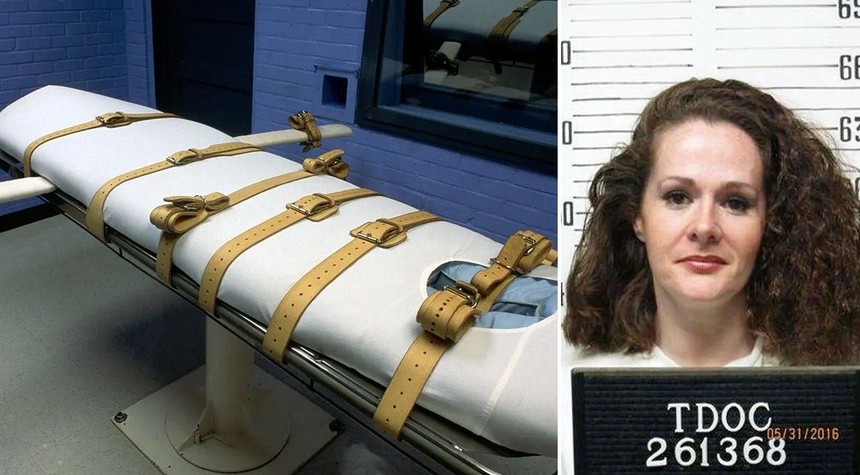
A Tennessee death row inmate who survived a failed execution attempt last September has filed an emergency motion in federal court to prevent prison officials from returning her to general population housing, claiming her weakened physical condition makes her vulnerable to attack.
Christa Pike, 50, remains in solitary confinement at the infirmary of the Debra K. Johnson Rehabilitation Center in Nashville while recovering from the botched lethal injection procedure carried out on September 30th. The execution failed after two doses of pentobarbital, the drug used in Tennessee’s lethal injection protocol, were administered but did not result in death. Medical personnel involved in the procedure have indicated that misplaced intravenous lines sent the lethal drugs into Pike’s arms rather than her veins.
In her court filing, Pike argues that her severe physical weakness leaves her unable to defend herself against potential threats from other inmates. The housing unit to which prison officials plan to return her is described in the motion as one that “houses inmates with significant histories of assaults and disciplinary problems.”
Pike provided specific details about the conditions in that unit based on her two years of previous residence there. “I witnessed multiple assaults by close custody inmates of other inmates and guards, multiple individuals who were undergoing acute psychological breakdowns, and significant danger,” the motion states.
“In my current physical condition, I could not defend myself or get away if another inmate attacked me,” Pike wrote in the filing. “I am afraid that I will be seriously hurt if I am moved to that pod while I am this weak.”
The motion also raises health concerns beyond physical safety. Pike’s attorneys argue that returning her to the previous housing unit poses a high risk of infection and further injury due to unsanitary conditions. The filing specifically notes that she would be required to clean and use what is described as a “roach-infested shower” without assistance while still recovering from the execution attempt.
Pike was sentenced to death for the 1995 murder of Colleen Slemmer, a 19-year-old fellow participant in a Job Corps training program in Knoxville. In 2001, she received an additional conviction for the attempted murder of another inmate, further complicating her criminal record.
Had the September execution succeeded, Pike would have become the first woman executed in Tennessee in more than two centuries. The failed execution has raised questions about the state’s lethal injection protocols and the potential for future attempts.
Legal scholars specializing in capital punishment have suggested that if Pike sustained mental impairment as a result of the botched execution, it could potentially affect her death sentence. The Eighth Amendment’s prohibition against cruel and unusual punishment has been interpreted by courts to bar the execution of individuals who lack a rational understanding of their punishment.
The federal court has not yet ruled on Pike’s emergency motion. Prison officials have not publicly commented on the transfer plans or the specific security concerns raised in the filing.
Related: Former FBI Chicago Chief Alleges Political Pressure in Immigration Protest Prosecutions