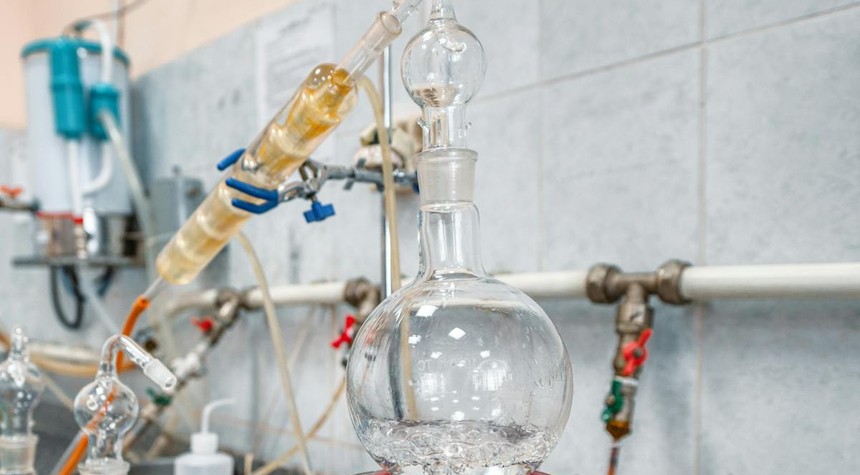
The United States Supreme Court announced Monday it will examine whether Congress exceeded its constitutional authority when it criminalized home distilling more than a century and a half ago.
The case centers on an 1868 federal law that makes producing spirits at home a criminal offense punishable by up to five years in prison and a $10,000 fine. The statute was enacted as part of a broader tax reform measure intended to combat fraud among commercial distillers during the Reconstruction era.
The high court’s decision to hear the matter follows conflicting rulings from two federal appeals courts, creating the legal uncertainty that often prompts Supreme Court intervention. The case carries significant implications for the scope of congressional power and the balance between federal authority and individual liberty.
At the heart of the dispute is whether the 1868 prohibition represents a legitimate exercise of Congress’s taxation powers or an unconstitutional overreach into activities properly reserved to states and individual citizens.
The primary case involves the Texas-based Hobby Distillers Association and several individuals who wish to distill spirits for personal consumption. A three-judge panel of the Fifth Circuit Court of Appeals ruled in their favor, determining that the ban exceeded Congress’s authority under both the Constitution’s Taxation Clause and the Necessary and Proper Clause.
A separate case from the Sixth Circuit reached the opposite conclusion. That matter involved an Ohio brewpub owner who sought to produce whiskey at home for his own use. The Sixth Circuit panel upheld the federal prohibition, creating the legal split the Supreme Court will now resolve.
The plaintiffs argue that Congress has transformed what was once a common American practice into a federal crime without proper constitutional foundation. They note that home distilling was widespread among the nation’s founders, including George Washington himself, who operated a distillery at Mount Vernon.
The constitutional questions at stake extend well beyond the particular issue of home spirits production. The plaintiffs contend the case presents fundamental questions about the extent of federal power and the rights reserved to states and individual citizens under the Constitution’s structure.
The federal government has vigorously defended the law’s constitutionality. Justice Department attorneys argue that the restriction serves as a necessary tool for preventing tax evasion on distilled spirits. They contend that home distilling operations are inherently more difficult to monitor and inspect than commercial facilities, making it easier for individuals to evade applicable excise taxes.
Government lawyers further assert that the prohibition falls well within Congress’s constitutional authority because it represents a convenient and useful means of executing the legislature’s enumerated taxation powers. They warn that striking down the law would inappropriately constrain congressional authority to enforce the nation’s tax system.
The case will be heard during the Court’s current term, with a decision expected by June. The outcome will clarify important boundaries of federal regulatory power while potentially affecting thousands of Americans interested in reviving a traditional practice that predates the republic itself.
Both the federal government and the plaintiffs petitioned the Court to review the matter, an unusual alignment that underscores the significance of the constitutional questions involved and the need for definitive resolution of the conflicting lower court decisions.
Related: Decorated Airman Loses Life in Rappelling Accident at Texas Stadium