
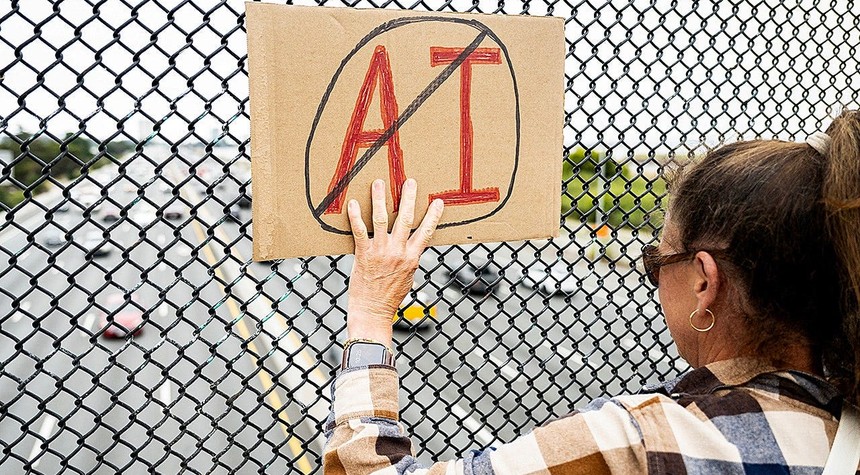
The national imperative to expand America’s technological infrastructure now faces an unexpected obstacle: the very communities being asked to host it. As Washington pursues technological superiority over China, local resistance to data center construction threatens to derail what federal officials consider essential to national security.
Representative Suhas Subramanyam of Virginia, whose district encompasses what has become known as “Data Center Alley,” has issued a stark warning to Congress. Without federal intervention to address community concerns, he argues, the backlash could obstruct the buildout that both parties agree is critical to maintaining America’s competitive edge against Beijing.
“The communities are being steamrolled by the industry,” Subramanyam stated. “They’re not feeling like anyone’s listening to them.”
The Virginia Democrat has proposed a comprehensive four-part federal plan designed to resolve what he characterizes as a false choice between unrestricted development and complete moratoriums. His proposal addresses facility siting, power cost distribution, energy and water consumption measurement, and security considerations for both the facilities and surrounding neighborhoods.
Central to his plan is the Fair Share Act, which would compel states to require large-scale power consumers to bear a greater portion of the infrastructure costs their operations necessitate. Subramanyam advocates using federal funding as leverage, suggesting that states failing to implement such requirements should face reduced federal dollars.
“If you are concerned about a race with China, when it comes to building data centers and artificial intelligence, you should want to work with us on a plan to get community buy-in for where to build data centers,” Subramanyam explained.
The congressman’s concerns reflect tensions that surfaced prominently this week in Ashburn, Virginia, where residents near a massive data center facility have complained about noise pollution and encroachment. The facility was constructed directly adjacent to a residential cul-de-sac, exemplifying what many locals describe as development without adequate consideration for existing neighborhoods.
Subramanyam maintains that constituents in his district generally understand the strategic importance of data center infrastructure. Their objections center not on the facilities themselves but on what they view as an inequitable distribution of costs and burdens.
Loudoun County officials point to tangible benefits from data center development, noting that revenue from these facilities has enabled a reduction in the real property tax rate from $1.145 per $100 of assessed value in 2016 to $0.805 in 2026.
However, Subramanyam contends that residents must weigh these tax benefits against costs that appear in other forms, particularly in their monthly utility bills. “What’s not OK is feeling like they come in, jack up utility costs and we pay for their power infrastructure,” he said, adding concerns about water consumption, air quality, and other community impacts.
The data center industry disputes assertions that their facilities drive higher residential power costs, though the congressman’s proposal suggests the matter requires federal attention to resolve competing claims and restore community confidence in the development process.
The situation in Northern Virginia may serve as a harbinger for communities nationwide as the demand for data center capacity continues its rapid expansion, driven by artificial intelligence development and the broader digital economy.
Related: Two Dead and 35 Wounded in South Georgia Block Party Shooting
