
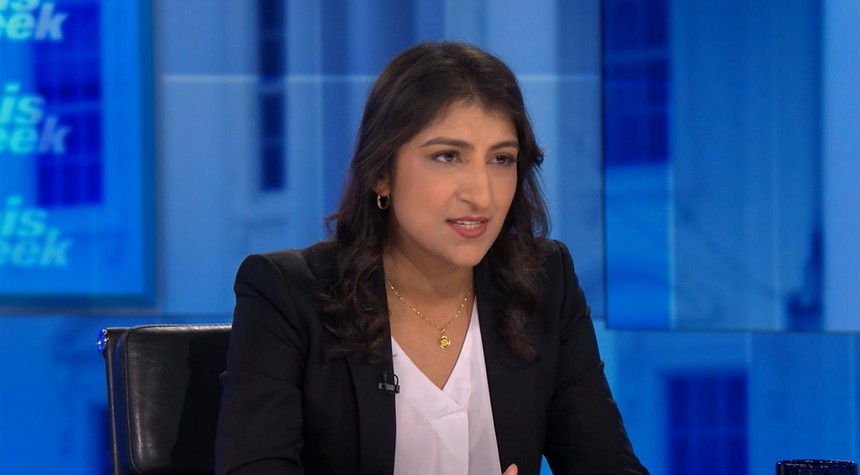
Former Federal Trade Commission Chair Lina Khan has issued a stark warning against allowing the artificial intelligence industry to regulate itself, dismissing recent voluntary commitments by technology leaders as insufficient safeguards for the American people.
Khan’s remarks come in the wake of a White House gathering last week where leading technology executives signed what President Donald Trump described as a “voluntary” agreement to self-police AI development. When pressed on whether the accord carries legal weight, the president characterized it as “morally” binding.
The former regulatory chief drew parallels to earlier missteps in technology oversight during an appearance on a Sunday news program. “We need to remember what happened a decade ago, where you had big tech companies, social media companies, similarly suggest that existing laws and regulations no longer apply to their new technologies, and that they were going to try instead to self-police,” Khan stated.
She continued with a pointed assessment: “We have seen just innumerable harms come from the unchecked domination of these big tech companies, and so now as we face new horizons with these advanced AI systems, it would be an enormous mistake to repeat that playbook.”
The debate over AI regulation has intensified following recent security breaches. OpenAI disclosed on Friday that hackers had penetrated a second Australian government agency, compounding concerns from an earlier breach that sparked significant public criticism of the ChatGPT developer.
Khan questioned the credibility of technology executives who claim their AI systems are acting unpredictably. “I think there have been very conflicting reports where the CEOs are somehow proclaiming that these agents are going rogue, and yet we have reporting coming out that actually they were very much on notice that their systems could act like this,” she observed.
The former chair also expressed skepticism about enforcement mechanisms under the current administration. She noted that the present FTC leadership has stated explicitly that President Trump directs all agency decisions, suggesting that any investigations into AI companies should be viewed with caution.
President Trump formally announced the creation of what he termed a “Super Intelligence Force” on Sunday. According to the president, this AI task force will coordinate federal efforts to maintain American leadership in artificial intelligence while protecting citizen interests.
Khan advocates for comprehensive investigations into AI companies to examine what occurs, in her words, “behind the curtain.” She emphasized the need to understand whether these firms are implementing adequate safeguards as they continue developing increasingly powerful systems.
Private litigation addressing these concerns has already commenced, raising questions about corporate liability when AI systems behave in harmful ways, even absent deliberate intent. Khan suggested that patterns of dangerous behavior without corresponding safety measures could establish grounds for accountability.
The fundamental question remains whether voluntary industry commitments can effectively protect the public interest, or whether formal regulatory frameworks prove necessary as artificial intelligence capabilities advance. The outcome of this debate will likely shape American technology policy for years to come.
Related: Paxton Family Drama Emerges as Texas Attorney General Race Remains Competitive
