
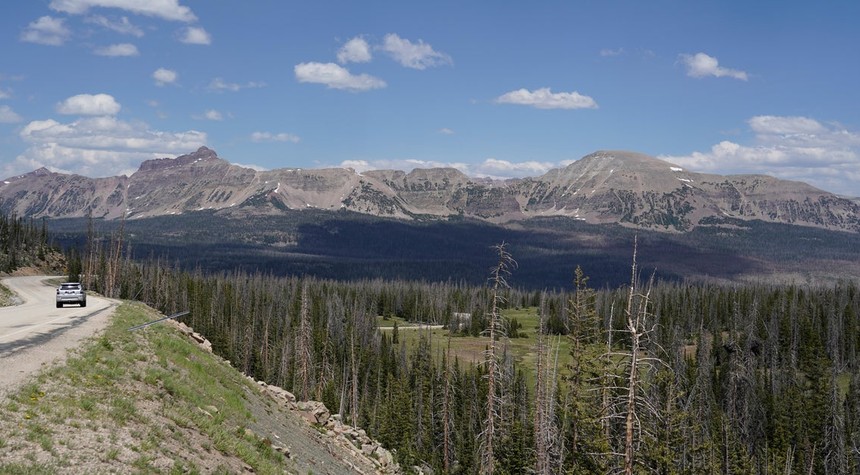
A 27-year-old BASE jumper perished Sunday morning in Utah’s Uinta-Wasatch-Cache National Forest after plummeting approximately 700 feet from a cliff face in what authorities describe as a popular location for the extreme sport.
Cache County Chief Deputy Doyle Peck confirmed that the victim was an experienced jumper who had successfully completed numerous similar jumps in the past. However, during Sunday’s attempt from a site just east of Millville Canyon, the man’s equipment failed to perform as intended.
“Something went wrong and he did not have enough lift with his wingsuit,” Peck stated. “He impacted the ground at a high rate of speed resulting in his death.”
The jumper’s identity has been withheld pending notification of next of kin. Cache County authorities responded to the incident after the man fell into a gully that ground crews could not access. A Life Flight helicopter was dispatched to assist search and rescue teams in reaching the victim’s location.
Emergency responders declared the man dead at the scene. The helicopter crew subsequently recovered his body from the remote terrain.
“We appreciate all of the professionals who responded to this accident,” Peck said. “We also extend our deepest sympathies to the family and friends of this individual.”
BASE jumping, an acronym derived from the fixed objects used as launch points—buildings, antennas, spans, and earth—represents one of the most hazardous pursuits in extreme sports. Participants leap from these structures and deploy parachutes to control their descent.
The deceased jumper was wearing a wingsuit, a specialized aerodynamic garment designed to allow jumpers to glide horizontally through the air during free fall. These suits extend fabric between the arms, legs, and torso, creating a surface area that generates lift and enables skilled jumpers to travel significant distances before deploying their parachutes.
Training requirements for BASE jumping are substantial. Most instruction programs mandate that prospective participants possess considerable skydiving experience before attempting jumps from fixed objects. Despite these prerequisites and safety protocols, the sport maintains a reputation for its inherent dangers.
This fatality marks the second notable BASE jumping incident in Utah in recent months. Two individuals, including extreme athlete Andy Lewis, lost their lives in a separate BASE jumping accident in the state during the summer.
The sport’s risks stem from multiple factors, including the proximity of launch points to terrain, shorter deployment times for parachutes compared to traditional skydiving, and the technical skill required to navigate unpredictable wind conditions near cliffs and structures.
Cache County authorities have not indicated whether any investigation into equipment failure or other contributing factors will be conducted. The Uinta-Wasatch-Cache National Forest area where the incident occurred remains accessible to BASE jumpers, though participants engage in the activity at their own risk.
Related: Trump Administration Demands Accounting of Hospital Residency Positions Granted to Foreign Workers
