
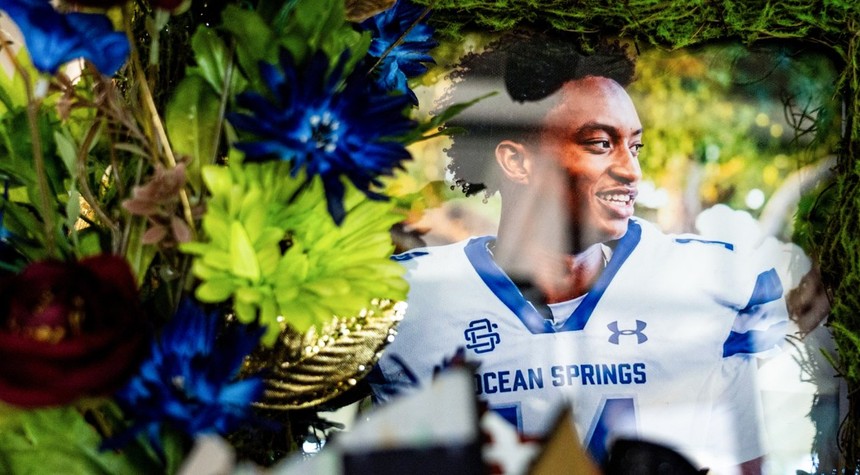
A Mississippi grand jury has declined to pursue criminal charges in the death of 18-year-old Nolan Wells, concluding an investigation that has drawn national attention and sparked heated debate about the circumstances surrounding the teenager’s death last summer.
District Attorney Angel Myers McIlrath announced Monday that the grand jury returned a “no true bill,” a legal determination indicating insufficient evidence exists to indict any individual with a crime. The announcement came via video message, accompanied by a partially redacted grand jury report detailing the scope and findings of the investigation.
Wells disappeared July Fourth while celebrating with friends on Horn Island, a barrier reef off the Mississippi coast accessible only by watercraft. His body was discovered two days later at the island’s northwestern tip. The case drew immediate scrutiny when civil rights attorney Ben Crump, representing the Wells family, raised questions about whether racial factors contributed to the young man’s death, noting that Wells appeared to be among few Black individuals present that day.
The district attorney directly addressed these allegations in her statement, categorically dismissing claims of racial motivation. “There is absolutely no evidence to support the allegations that Nolan’s disappearance and death were racially motivated,” Myers McIlrath stated. “Nolan’s friends loved Nolan, and Nolan loved them. Nolan chose to stay on the island that day, and there is not a scintilla of evidence to contradict that.”
The investigation was comprehensive in scope. According to the grand jury report, the panel issued 132 subpoenas, heard testimony from 43 witnesses, and invited seven additional persons to testify. The grand jury itself comprised 23 citizens from Jackson County, ranging in age from 27 to 68 years. The composition included 13 men and 10 women, with racial diversity spanning 12 Caucasians, five African Americans, one Asian, two Hispanics, two Native Americans, and one individual who identified as other.
Myers McIlrath took particular issue with the conduct of Crump’s legal team, asserting that they had previously informed her office of finding no evidence that a crime had been committed against Wells. “What I am suggesting is that the Crump team knew better but did not do better,” the district attorney said, while acknowledging she was not faulting Wells’ grieving mother for the speculation that followed.
Crump responded Tuesday with a statement maintaining his position. “This grand jury result leaves us with more questions than answers. Nolan’s family will not rest until we know what happened to him, and neither will we,” he said. The attorney pointed to autopsy findings, including bruises on the back of Wells’ head documented by Mississippi’s own pathologist, as well as an independent autopsy that reportedly found traces of blood and recent blunt force injuries. “To this day, not one person has explained how they got there,” Crump added.
The case remains contentious. While the grand jury found no credible evidence supporting allegations of criminal conduct by those who traveled to or from Horn Island that day, questions about the precise circumstances of Wells’ death persist. The Wells family was expected to address the public Tuesday following the grand jury’s determination.
The matter now rests where such difficult cases often do, in the gap between legal sufficiency and complete factual certainty.
Related: Internet Personality Facing Rape Charges in Massachusetts
