
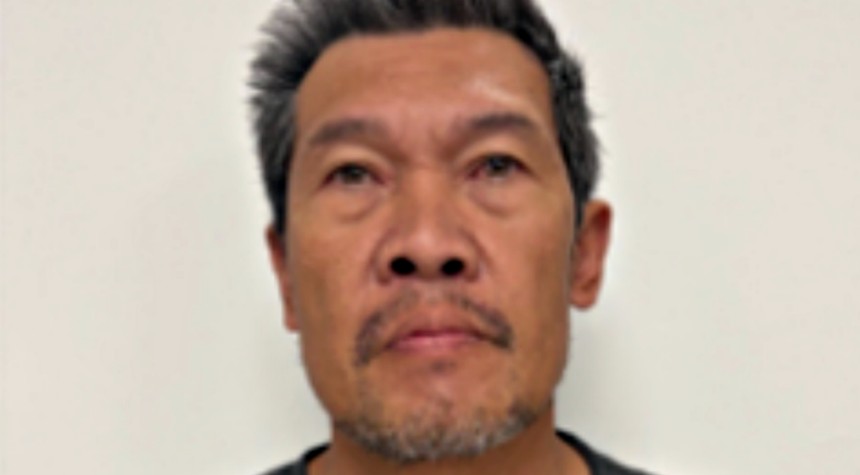
Immigration and Customs Enforcement has taken into custody a Philippine national who has been living illegally in the United States for more than a quarter century while accumulating multiple criminal convictions.
Jaime Tan Francisco, 55, was arrested by ICE agents on August 2nd, approximately one week after Las Vegas police detained him on charges including domestic battery, attempted arson, drug possession, resisting an officer, and possessing drug paraphernalia.
According to Acting ICE Director David Venturella, Francisco entered the United States through Detroit, Michigan in April 2000 under authorization that permitted him to remain in the country until October 26th of that year. Rather than departing as required, Francisco overstayed his permitted period and has resided in the United States illegally for nearly 26 years.
The criminal record Francisco accumulated during those years reveals a troubling pattern. In July 2006, he was convicted of harassment. Eight years later, in 2014, authorities convicted him of methamphetamine possession. The recent Las Vegas arrest adds significantly more serious charges to that record, including attempted arson and domestic battery.
“Criminal illegal aliens are unwelcome in the U.S., and ICE is partnering with state and local police to keep them off our streets and out of our communities,” Venturella stated in announcing the arrest.
The case highlights several significant issues within the immigration enforcement debate. Francisco’s ability to remain in the country for more than two decades after his authorized stay expired raises questions about enforcement mechanisms during multiple administrations. His progression from harassment to drug possession to the more serious recent charges demonstrates the consequences that can result when visa overstays are not promptly addressed.
The arrest also illustrates the current administration’s emphasis on coordination between federal immigration authorities and local law enforcement. Francisco’s detention by ICE followed directly from his arrest by Las Vegas police, suggesting improved communication and cooperation between agencies at different levels of government.
Visa overstays represent a substantial portion of the illegal immigration population in the United States, though they receive less attention than border crossings. Francisco’s case serves as a reminder that immigration enforcement must address not only those who enter illegally, but also those who violate the terms of their legal entry.
The combination of immigration violations and criminal conduct in Francisco’s case represents precisely the type of situation federal authorities have identified as an enforcement priority. Whether such coordination between local and federal agencies will expand, and whether it will prove effective in addressing the broader challenges of illegal immigration, remains to be seen.
Francisco now faces both criminal prosecution for his recent alleged offenses and immigration proceedings that will likely result in his removal from the United States.
Related: President’s Granddaughter Opens Up About Leaving Home for College Athletics
