
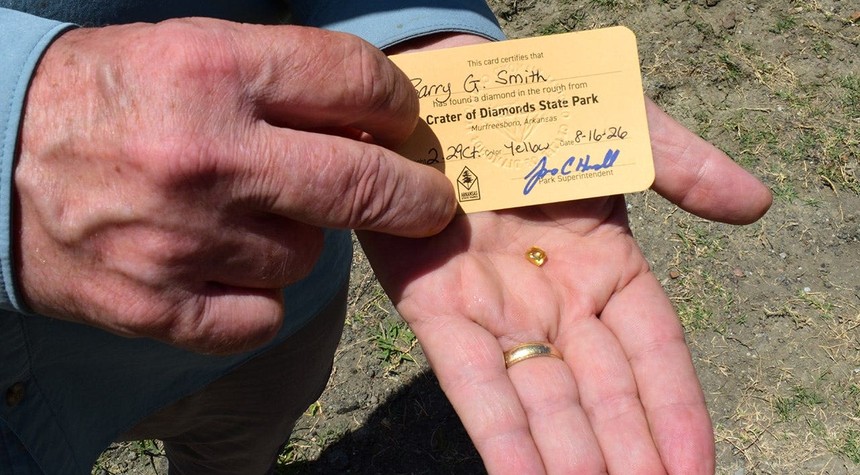
A Tennessee grandfather’s leisurely afternoon at an Arkansas state park produced an extraordinary discovery that left even seasoned park officials astonished.
Barry G. Smith of Germantown, Tennessee, was spending time with his wife and two granddaughters, Sage and Juniper, at Crater of Diamonds State Park in Pike County when he spotted what appeared to be a glimmering piece of mica in the park’s East Drain section. The discovery occurred on August 16, approximately thirty minutes into the family’s diamond search.
Smith initially dismissed the find as unremarkable. He placed the object in his shirt pocket and continued his outing with his family, who had rented a wagon and basic search kit from the park expecting nothing more than an educational afternoon together.
The true nature of Smith’s discovery became apparent only when he brought the specimen to the park’s Diamond Discovery Center for inspection. Staff members confirmed that Smith had found a 2.29-carat yellow diamond, a particularly rare variety at the park.
“I was dumbfounded when I first saw the diamond,” facility supervisor Ralph Hall stated. “Its overall shape and color immediately reminded me of the Pearadin Schumacher American Dream Diamond found earlier this year.”
Park officials note that yellow diamonds represent the rarest variety discovered at Crater of Diamonds State Park. Most visitors who find diamonds at the facility uncover brown or white stones. The distinctive yellow coloration occurs when nitrogen is absorbed into the crystal structure during the diamond’s formation deep within the earth. Nitrogen impurities absorb blue light wavelengths while reflecting yellow ones, producing the gem’s characteristic hue.
Smith expressed considerable excitement about the unexpected discovery. “I never expected to find a diamond here,” the grandfather said. “The potential was there, but you never come here expecting to find one.”
The find joins a list of remarkable amateur discoveries at the Arkansas park, which remains one of the few locations in the world where ordinary citizens can search for diamonds and keep whatever they find. The site attracts thousands of visitors annually, though significant discoveries remain relatively uncommon.
Smith’s discovery serves as a reminder that extraordinary finds can emerge from simple family outings. What began as a grandfather’s effort to create memories with his grandchildren concluded with a genuine geological treasure that surprised even experienced park personnel who evaluate hundreds of specimens throughout the year.
The yellow diamond now belongs to Smith, in accordance with park policy that allows visitors to retain any diamonds they discover on the premises. Park officials did not disclose Smith’s plans for the gem, though yellow diamonds of this size typically command substantial value in the marketplace due to their rarity and distinctive appearance.
Related: Texas Rescue Teams Lower Patient from 220-Foot Crane in Technical Operation
