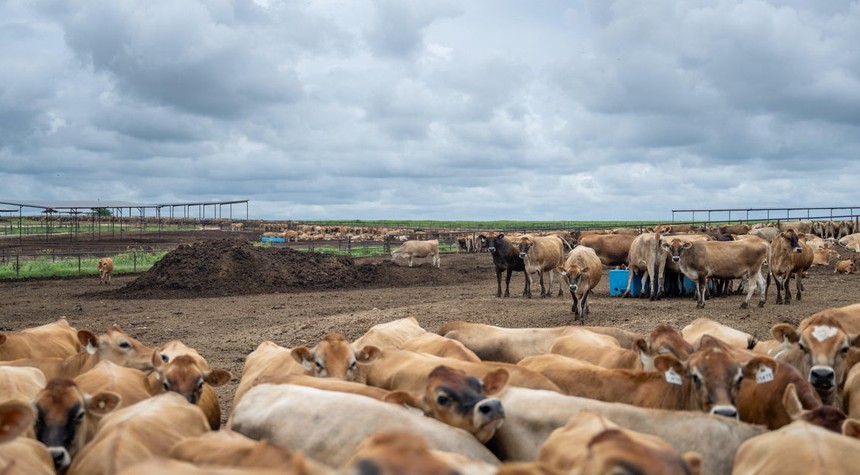
The Trump administration faces mounting opposition from America’s cattle ranchers over a policy designed to reduce consumer beef prices through expanded imports, with producers warning the measure could devastate the domestic cattle industry at a critical rebuilding period.
President Trump announced through his social media platform last week that the United States would temporarily waive higher tariffs on ground beef imports, permitting up to 300,000 metric tons of foreign beef to enter American markets at prices 25 percent below current domestic rates. The policy, scheduled to take effect September 1, specifically applies to lean beef trimmings typically blended with higher-quality domestic beef in ground beef production.
The administration’s decision responds to beef prices reaching nearly seven dollars per pound, an increase of approximately 63 cents over the past year and nearly three dollars since 2021. White House officials maintain the temporary import expansion will deliver immediate relief to American consumers while including safeguards to protect domestic ranchers and provide opportunity for herd growth.
However, cattle producers across the nation dispute this assessment, arguing the policy arrives at precisely the wrong moment for an industry struggling with depleted herds and escalating production costs.
The timing proves particularly problematic because the import window directly overlaps with the peak sales period for American ranchers. Between September and November, cattle producers make critical decisions regarding herd management and future production capacity. The American Farm Bureau Federation expressed concern that increased foreign competition during this crucial period could suppress prices ranchers receive for their cattle, undermining their ability to rebuild herds that have reached their smallest size in decades.
Shawn Harris, a Georgia cattle rancher, articulated the predicament facing producers nationwide. With substantial increases in diesel fuel, fertilizer, and other input costs driven partly by tariff policies, ranchers already operate on thin margins. The prospect of depressed cattle prices when producers bring animals to market threatens to eliminate profitability entirely, potentially forcing operations out of business rather than enabling herd expansion.
The economic mathematics facing ranchers reveals the severity of the situation. Industry representatives indicate maintaining a single cow now costs approximately $1,100 annually. When market uncertainty makes future prices unpredictable, producers face difficult calculations about whether continuing operations remains economically viable.
Kimberly Ratcliff, who operates a ranching business in East Texas, acknowledged the administration’s policy might provide short-term consumer relief. However, she emphasized it fails to address the fundamental challenge confronting the industry: enabling producers to absorb high production costs while rebuilding herds depleted over recent years.
The policy debate highlights a tension between immediate consumer interests and long-term domestic production capacity. While lower beef prices at grocery stores offer tangible benefits to American families struggling with inflation, ranchers argue that undermining domestic producers creates future vulnerability in the nation’s food supply chain.
The cattle industry has experienced significant contraction in recent years, with herd sizes falling to levels not seen in decades. Rebuilding requires sustained profitability that enables ranchers to retain breeding stock rather than liquidating herds. Industry advocates maintain this rebuilding process, not temporary import measures, represents the only sustainable path to stable, affordable beef prices for American consumers.
As the September 1 implementation date approaches, the administration faces the challenge of balancing competing economic pressures while determining whether short-term price relief justifies potential long-term consequences for America’s cattle industry.
Related: Military Rescues 135 Exotic Animals During Raids on Mexican Fuel Smuggling Ring