
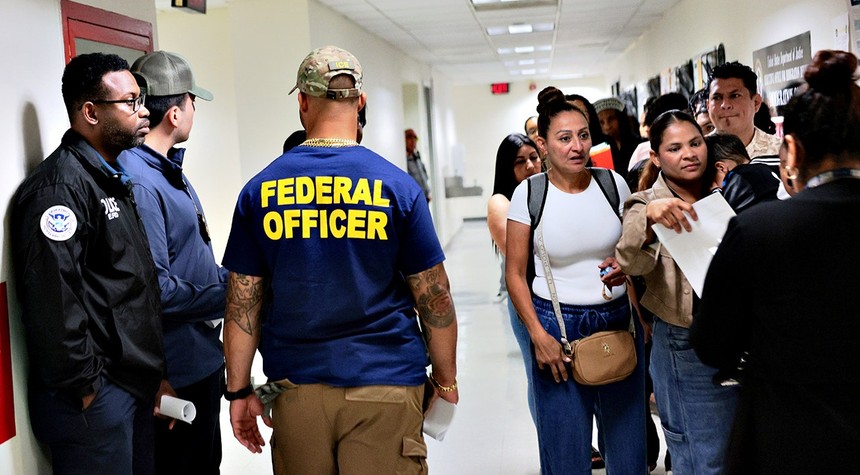
The Justice Department filed suit Tuesday against an Ohio municipal court, challenging a recently adopted rule that restricts federal immigration enforcement activities within the courthouse complex.
The legal action targets Franklin County Municipal Court’s Rule 2.10, which prohibits civil arrests on courthouse grounds unless officers possess a warrant issued by a judge. Federal officials contend this policy unlawfully interferes with immigration enforcement and compels agents to conduct arrests in environments that pose greater risks to both officers and the public.
The dispute centers on a fundamental question of jurisdictional authority. Federal immigration law permits Immigration and Customs Enforcement agents to execute arrests using administrative warrants or, in certain circumstances, without warrants entirely. The Franklin County rule, however, recognizes only judicial warrants as sufficient authorization for arrests within the courthouse.
Assistant Attorney General Brett Shumate of the Justice Department’s Civil Division stated that such restrictions obstruct federal law enforcement and enable dangerous individuals to evade federal authorities, contrary to congressional mandates for their detention and removal.
According to the federal complaint, the courthouse rule has forced ICE agents to pursue arrests in less secure settings, including private residences, workplaces, and other public locations. These at-large operations prove more unpredictable and resource-intensive than courthouse arrests. The complaint notes that two Columbus-based ICE officers required hospitalization following violent encounters during field arrests within the past three months.
The operational impact extends beyond safety concerns. Field arrests typically require four to six officers, compared to the two officers generally needed for courthouse arrests. ICE agents must also conduct extended surveillance operations to locate individuals away from courthouse facilities, diverting resources from other enforcement priorities.
Federal authorities argue that courthouses provide inherently safer environments for conducting arrests. Individuals entering these facilities undergo security screening for weapons and contraband. ICE agents have historically coordinated their activities with courthouse security personnel and typically waited until legal proceedings concluded before executing arrests, according to the complaint.
The Justice Department reports that ICE successfully conducted at least twelve arrests at Franklin County Municipal Court in recent years prior to the adoption of Rule 2.10, with no documented security incidents resulting from these operations.
The Franklin County policy permits arrests at the courthouse only when officers possess warrants issued by judicial authorities, not administrative warrants issued by immigration officials. The rule aims to protect individuals conducting lawful court business from civil arrest actions.
This lawsuit represents part of a broader national debate over the intersection of federal immigration enforcement authority and local government policies. Similar restrictions have emerged in jurisdictions across the country, reflecting ongoing tensions between federal enforcement priorities and local concerns about courthouse accessibility.
The outcome of this case may establish significant precedent regarding the extent to which local courts can regulate federal law enforcement activities within their facilities. At stake are questions of federal supremacy in immigration matters, officer safety considerations, and the balance between enforcement effectiveness and courthouse accessibility for all individuals, regardless of immigration status.
The Justice Department’s commitment to protecting federal enforcement prerogatives suggests this matter will be vigorously litigated through the federal court system.
Related: Up to 200,000 Foreigners Face Visa Revocation Over Asylum Applications
